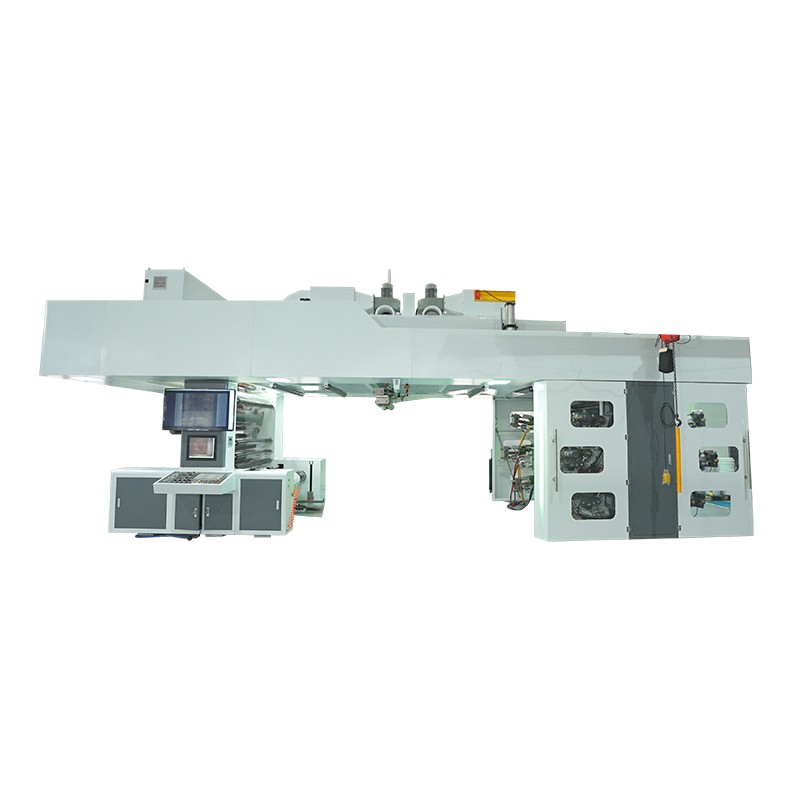
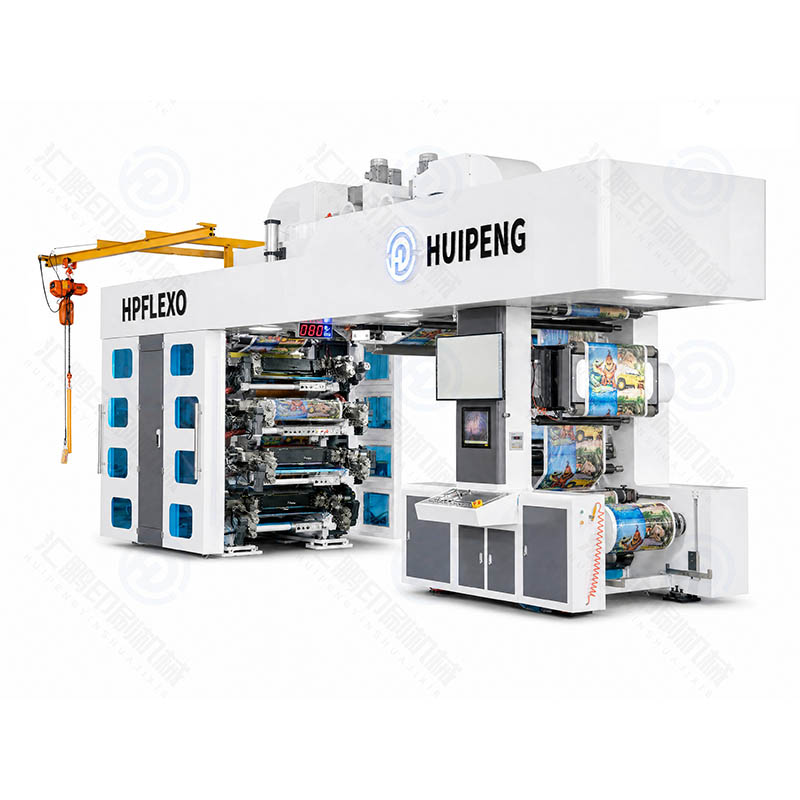
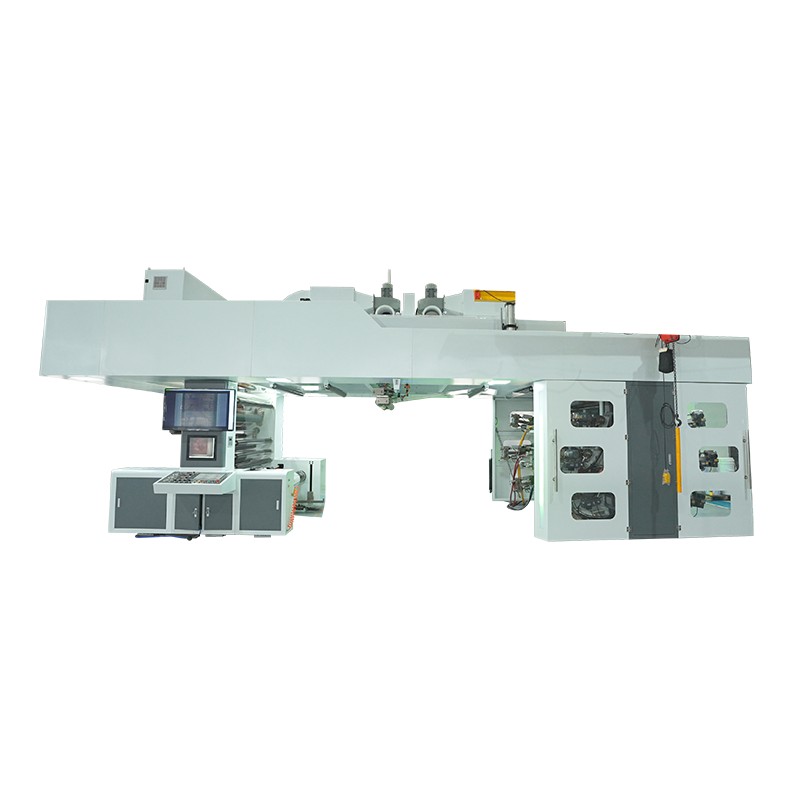
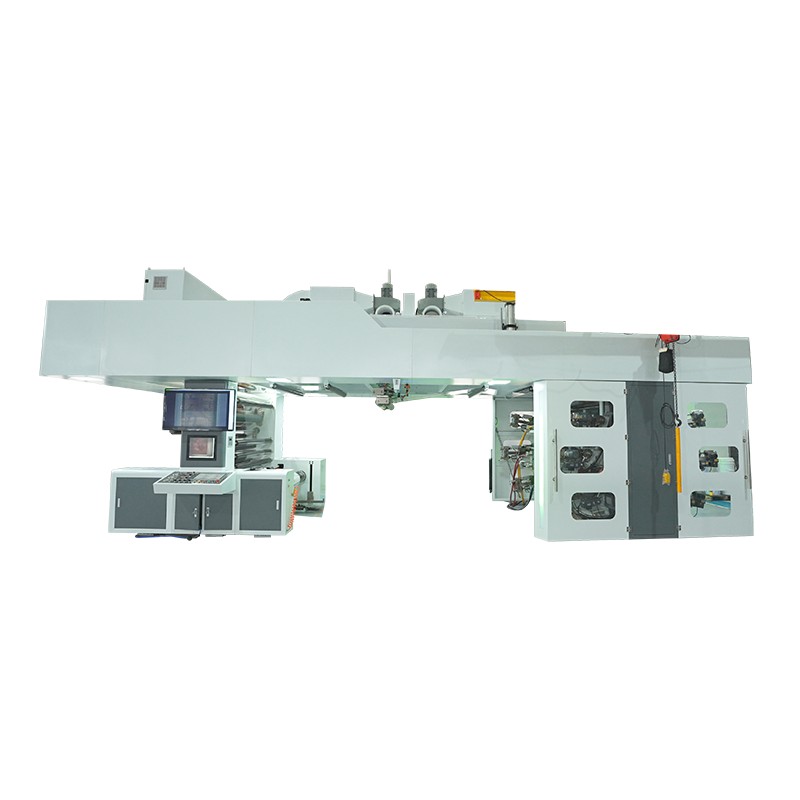
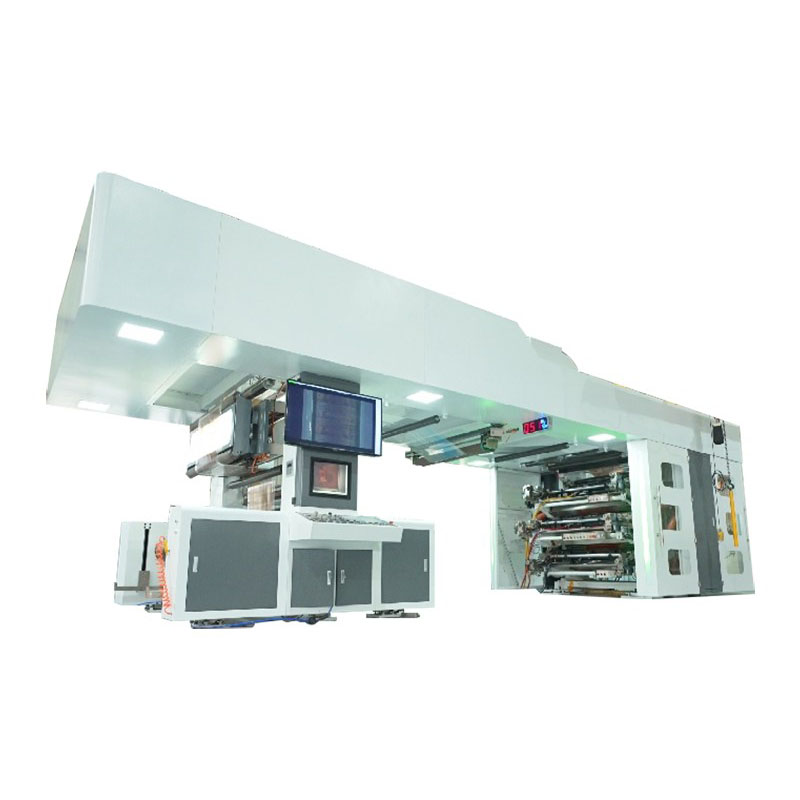
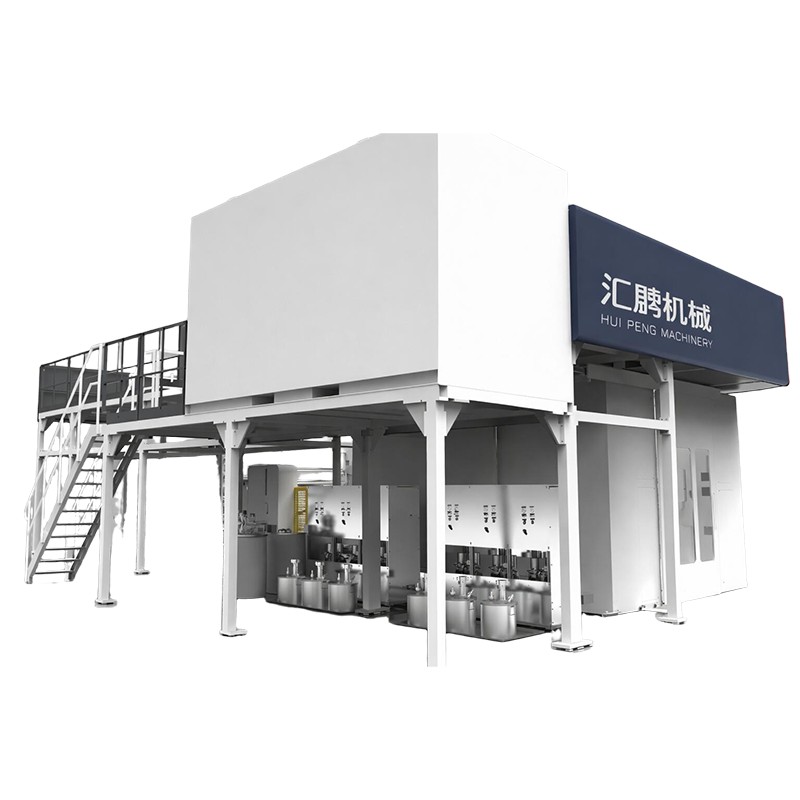
In the flexible packaging and label printing industries, selecting the right printing technology directly impacts production efficiency, print quality, material adaptability, and long-term operating costs. Two widely used configurations are the CI (Central Impression) flexo printing machine and the horizontal inline flexo printing machine.
Although both are based on flexographic printing technology, their mechanical structures, performance characteristics, and application scenarios differ significantly.
1. Structural Design: Central Drum vs. Independent Impression Cylinders
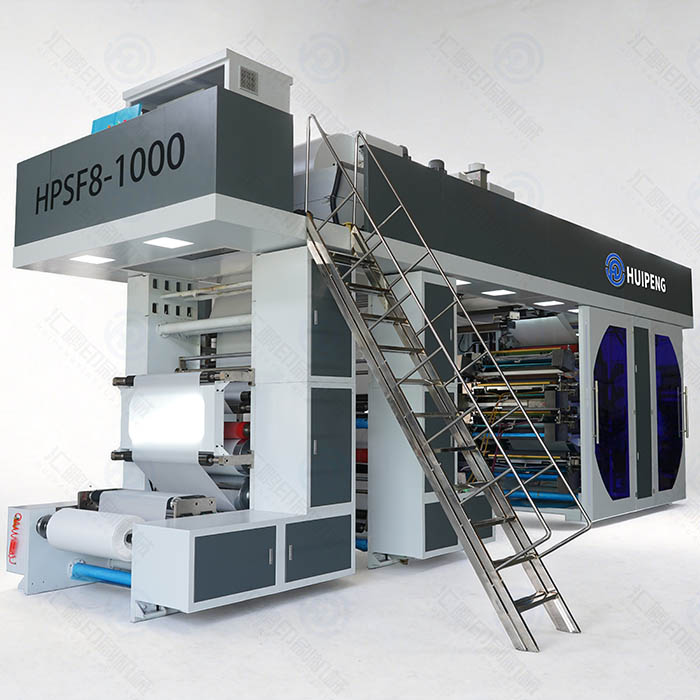
A CI flexo printing machine (Central Impression type) is designed with all printing units arranged around a single large central impression drum. The substrate wraps around this drum and remains in continuous contact throughout the multi-color printing process.
Key structural feature:
One central impression cylinder supports the substrate across all color stations.
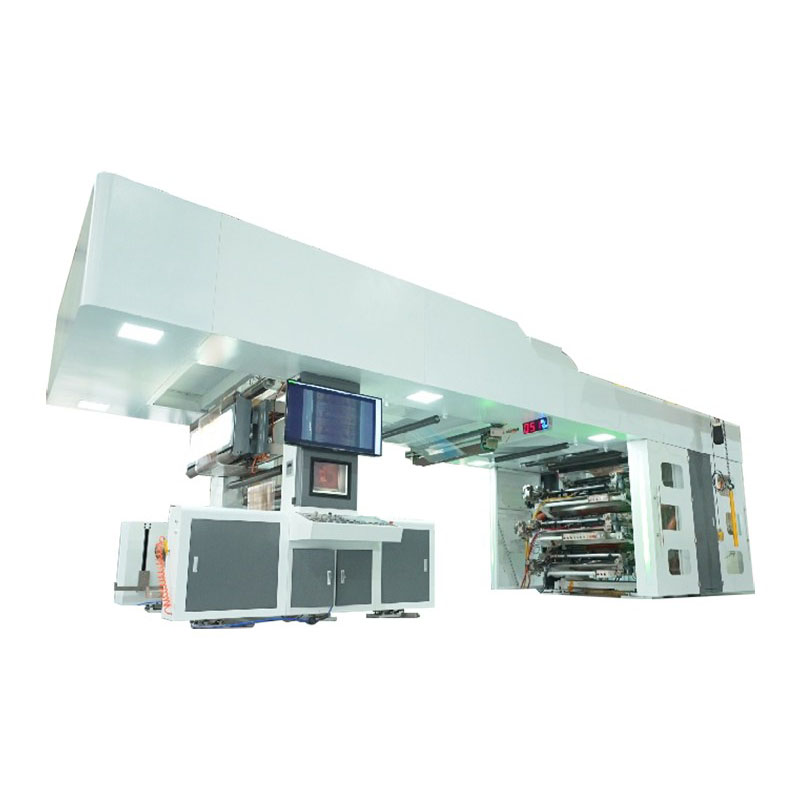
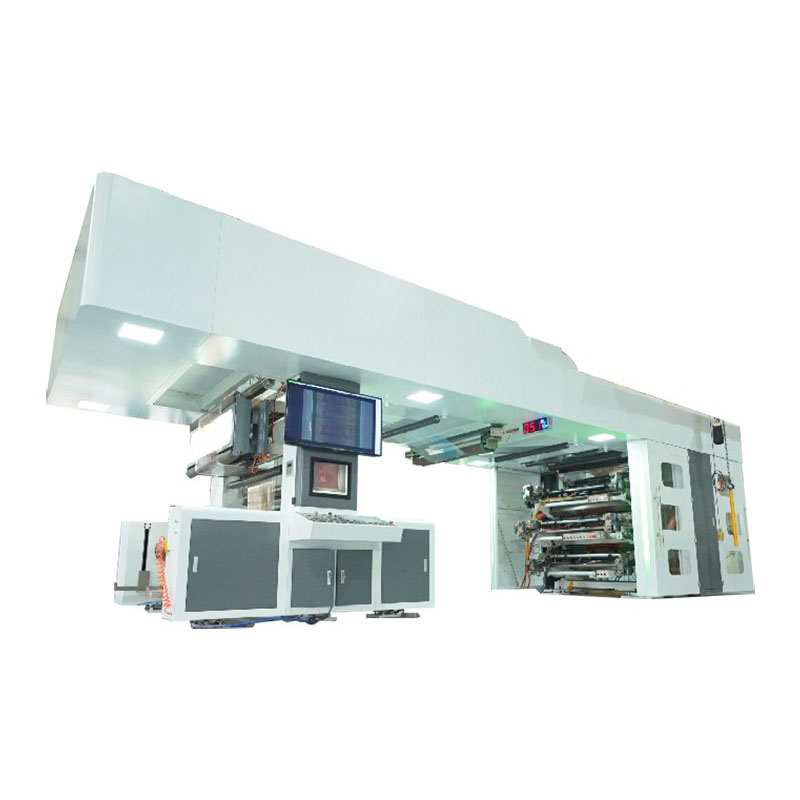
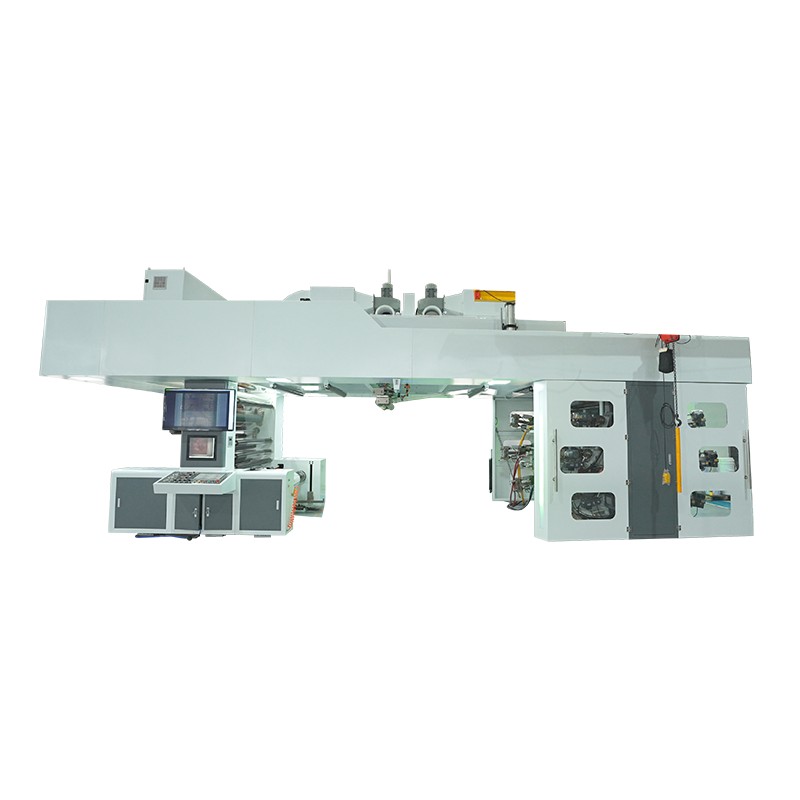
In contrast, a horizontal inline flexo printing machine arranges each printing unit sequentially in a straight line. Each color station has its own independent impression cylinder.
Key structural feature:
Separate impression cylinder for each printing station.
Substrate travels horizontally from one unit to the next.
2. Printing Registration Accuracy
CI Flexo: Superior Color Registration
Because the substrate remains fixed against a single central drum, material stretching and tension variation are minimized. This results in:
Excellent color-to-color registration
Reduced dot gain
Stable printing on thin films (PE, PP, PET)
CI presses are particularly advantageous for flexible and extensible materials.
Inline Flexo: Registration Depends on Tension Control
In inline machines, the substrate moves freely between stations. Registration accuracy depends heavily on:
Tension control systems
Web guiding precision
Servo synchronization
While modern servo-driven inline machines can achieve good registration, they are generally more sensitive to thin, stretchable materials.
3. Application Focus
CI Flexo Printing Machine — Best For:
Flexible packaging films
Food and snack packaging
Laminated structures
Pharmaceutical packaging
High-speed multi-color printing (6–10 colors)
CI flexo machines dominate the flexible packaging industry due to their stability and high-speed performance.
Horizontal Inline Flexo Printing Machine — Best For:
Paper printing
Labels and tags
Corrugated board pre-printing
Carton packaging
Thicker and less extensible substrates
Inline systems are often preferred when printing on rigid or semi-rigid materials.
4. Production Speed
CI flexo presses commonly operate at 300–500 m/min or higher.
Inline flexo machines typically run at moderate speeds depending on substrate and configuration.
CI presses are generally better suited for large-scale, long-run industrial production.
5. Floor Space & Installation
CI Flexo:
More compact footprint
Vertical satellite structure
Efficient use of factory space
Inline Flexo:
Longer horizontal layout
Requires more linear floor space
Easier access to individual units for maintenance
6. Investment & Operational Considerations
Comparison Factor
CI Flexo Printing Machine
Horizontal Inline Flexo Machine
Registration Precision
Very High
High (tension-dependent)
Suitable Substrates
Thin flexible films
Paper, labels, carton
Speed
High
Moderate to High
Floor Space
Compact
Larger
Changeover Efficiency
Fast with sleeve system
Relatively flexible
7. Technology Trend: Automation & Servo Control
Both machine types are evolving toward:
Full-servo drive systems
Automatic registration control
Sleeve technology
Energy-saving drying systems
Smart tension monitoring
However, in the global flexible packaging market, CI flexo printing machines remain the mainstream solution for high-end film printing applications.
Conclusion
The core difference between a CI flexo printing machine and a horizontal inline flexo printing machine lies in their structural design and substrate handling method.
CI flexo machines excel in high-speed, high-precision printing of flexible packaging films due to their central impression drum design.
Horizontal inline flexo machines offer structural flexibility and are well suited for paper, labels, and rigid substrates.
When selecting equipment, converters must evaluate substrate type, production volume, required print accuracy, available floor space, and long-term operational strategy.
As the packaging industry continues to demand higher efficiency and sustainability, both CI and inline flexographic technologies will play critical roles—each serving distinct market segments with specialized advantages.
We use cookies to offer you a better browsing experience, analyze site traffic and personalize content. By using this site, you agree to our use of cookies. Privacy Policy