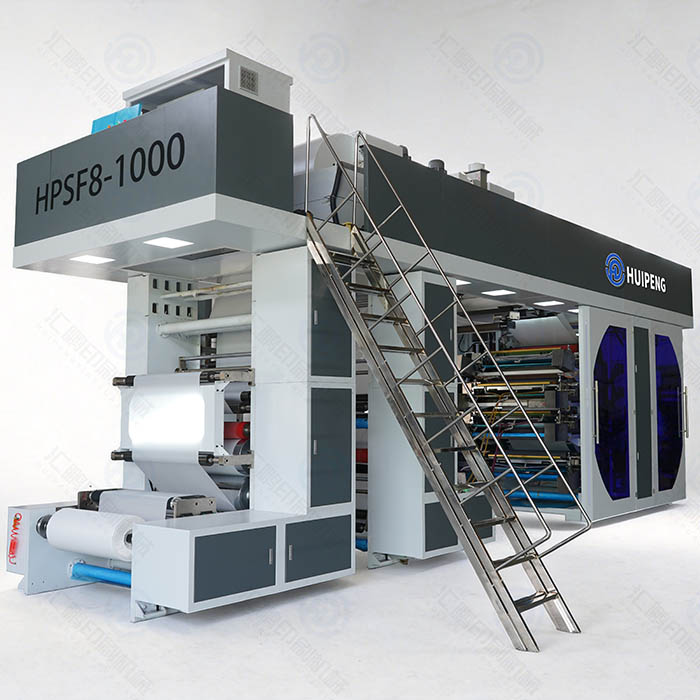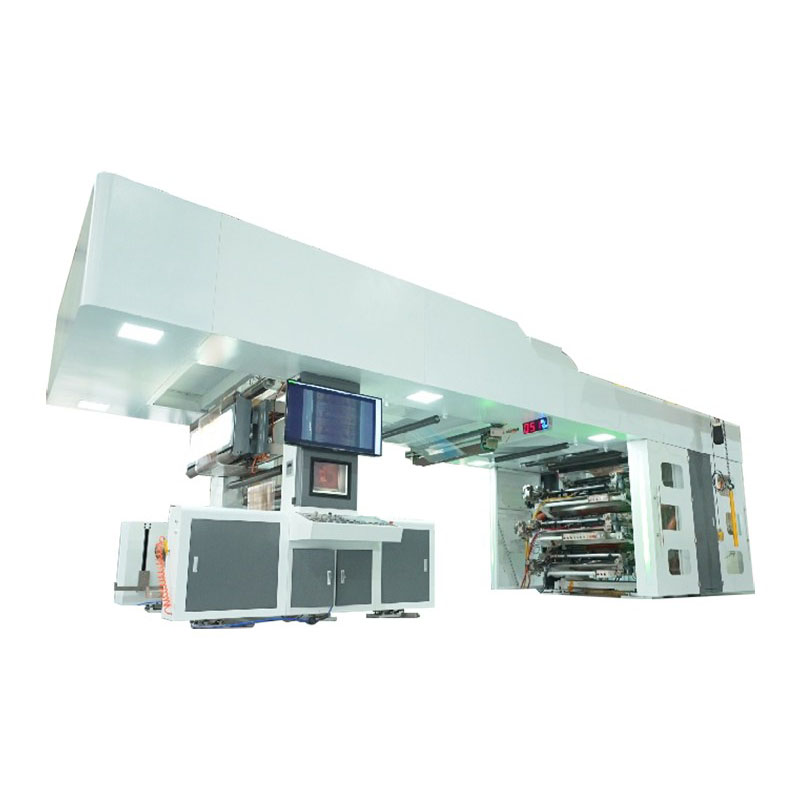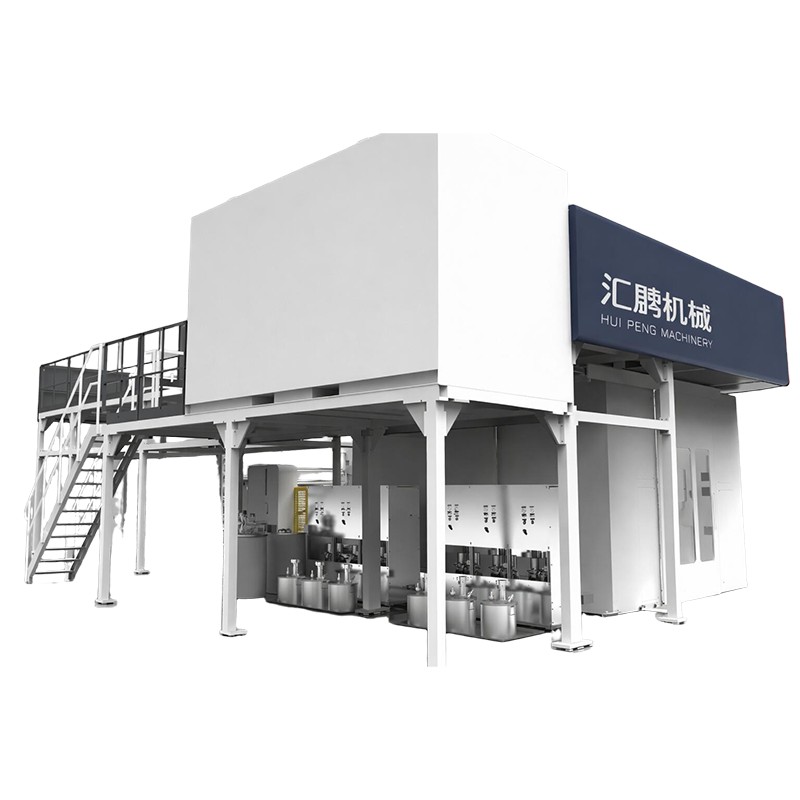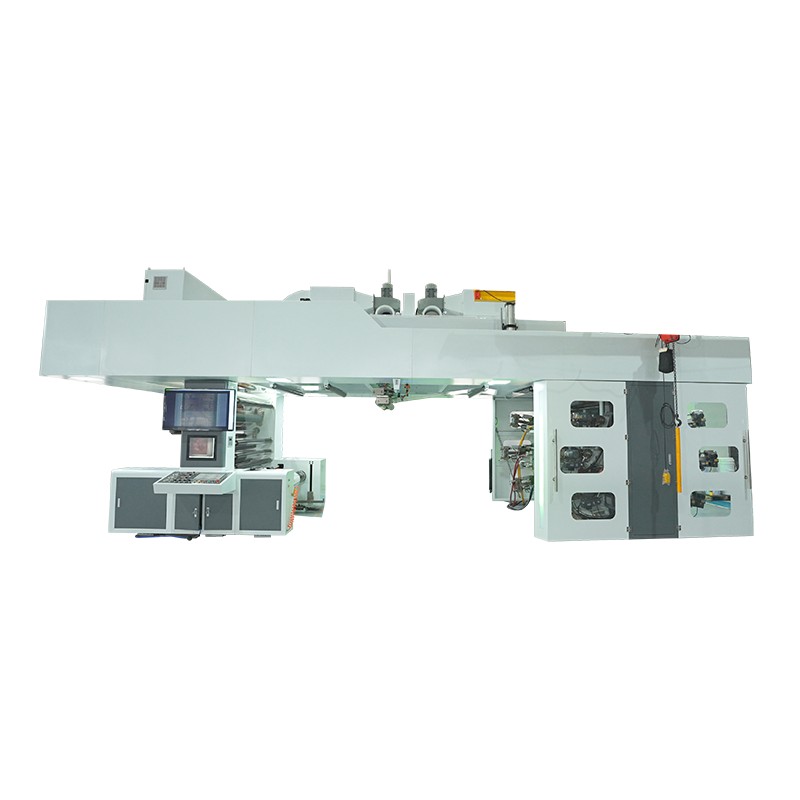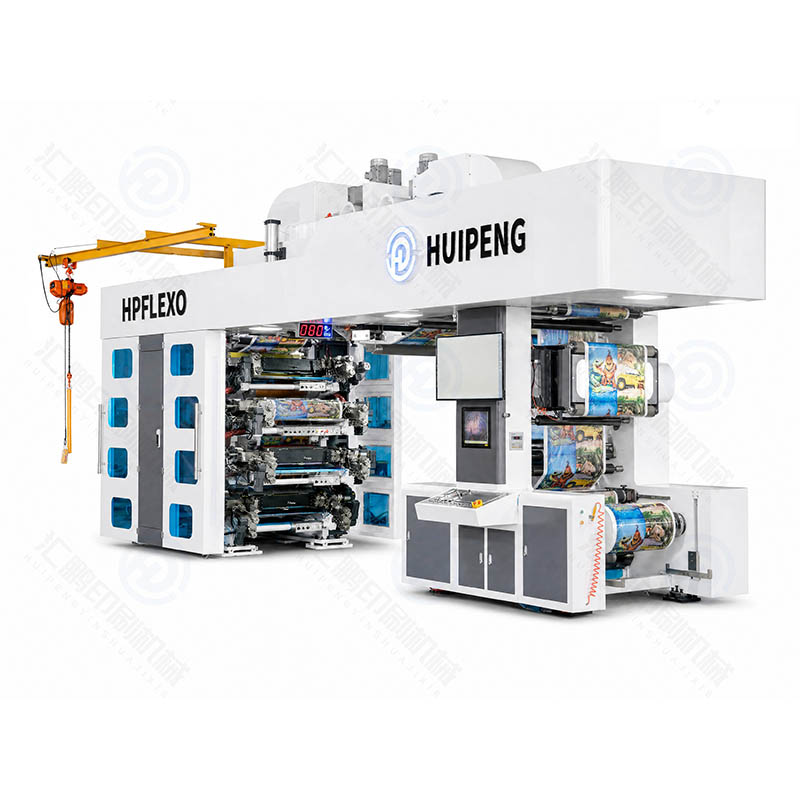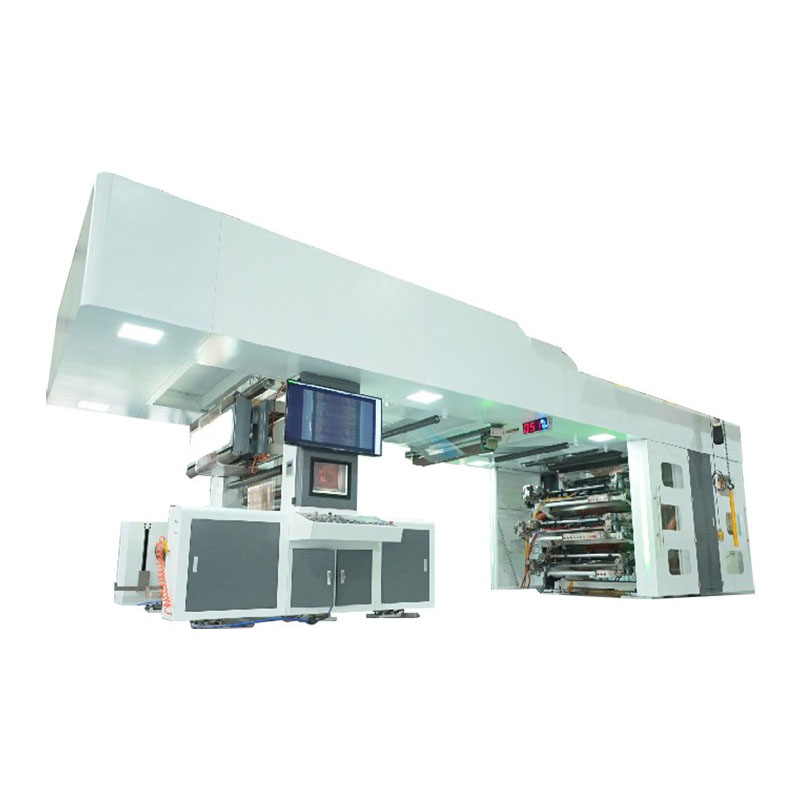

For packaging converters that need tight register control without gear-driven wear, a gearless inline flexo press provides a direct upgrade path. When comparing press styles, many operations also examine the Central impression gearless flexo press for unsupported films, the Gearless stack flexo press for heavyweight board, the High speed gearless flexo press for long-run labels, and the Fully automatic gearless flexo press for near-lights-out operation. The inline architecture is especially effective when a converter must combine multiple station functions such as flexo printing, varnishing, cold foil, lamination, and rotary die cutting in a continuous web path.
The Gearless inline flexo press uses independent servo drives at every print station, removing drive gears and eliminating backlash. This improves print uniformity on fine screens and reduces set-up time. The press is built around a modular frame so users can start with four colors and expand to twelve stations without changing the main drive or dryer layout. The servo-driven sleeve system allows repeat length changes without gear changes; operators load lightweight carbon fiber or aluminum sleeves, and the control system calculates print position automatically. This feature is particularly valuable for short-run jobs that require frequent size changes.
| Parameter | Standard Configuration | Optional Upgrade |
|---|---|---|
| Web width | 850 mm | 1050 mm / 1250 mm |
| Print colors | 6 | Up to 12 |
| Repeat range | 200–800 mm | 100–1200 mm servo sleeve |
| Registration accuracy | ±0.05 mm | ±0.03 mm with camera auto-register |
| Maximum speed | 200 m/min for label stock | 300 m/min for film/paper |
| Drying system | Hot air + IR | UV LED, electron beam, water-cooled chill rolls |
| Control system | Touchscreen PLC with job memory | Fully automated pre-register and wash-up |
| Inspection | Strobe light | 100% print inspection camera |
Inline options include turn-bar for double-sided printing, delam/relam unit for unsupported film, flat-bed or rotary die cutting, slitting, sheeting, and stacker delivery. Tension zones are managed with load cells in each segment, maintaining web stability from unwind to rewind. Typical applications include shrink sleeves, wrap-around labels, flexible packaging pouches, duplex board cartons, and paper cups.