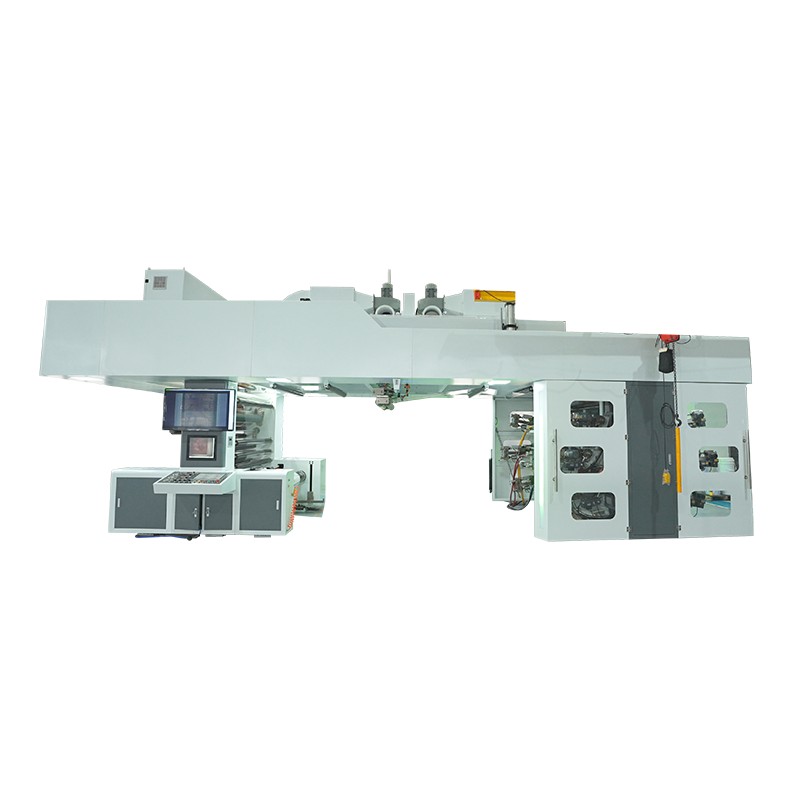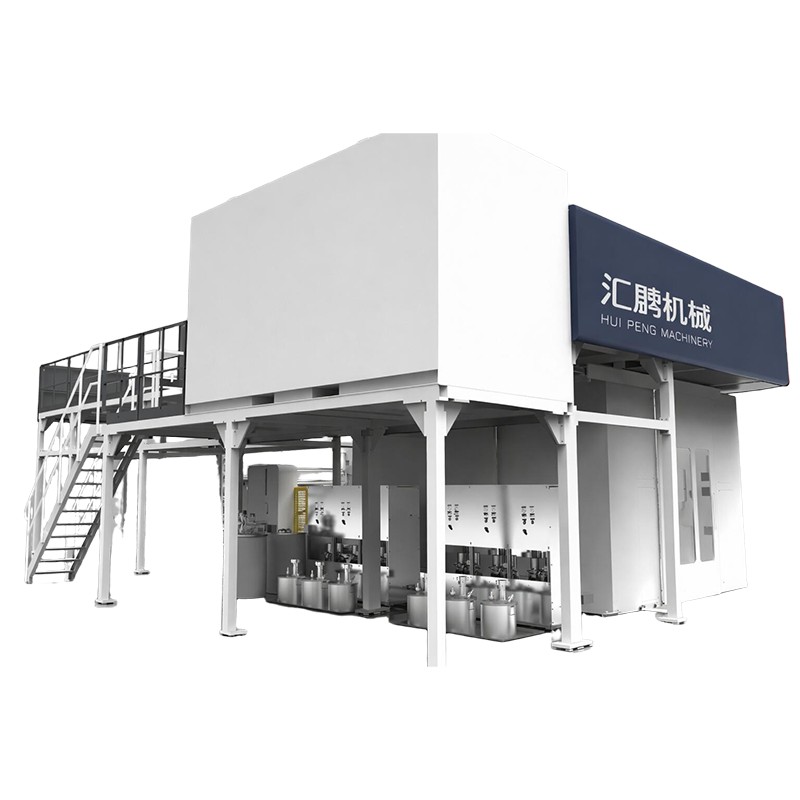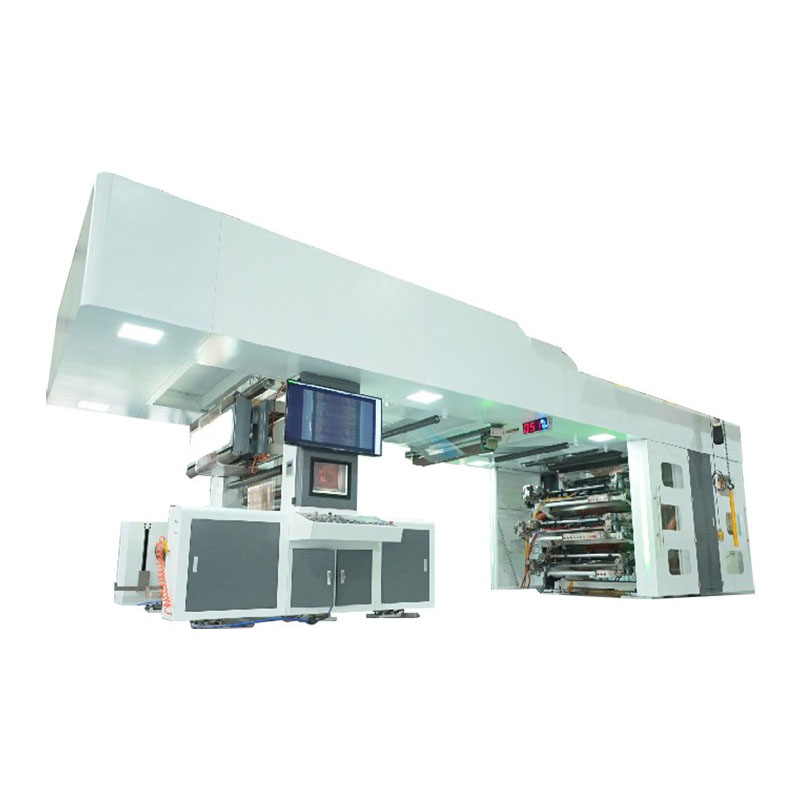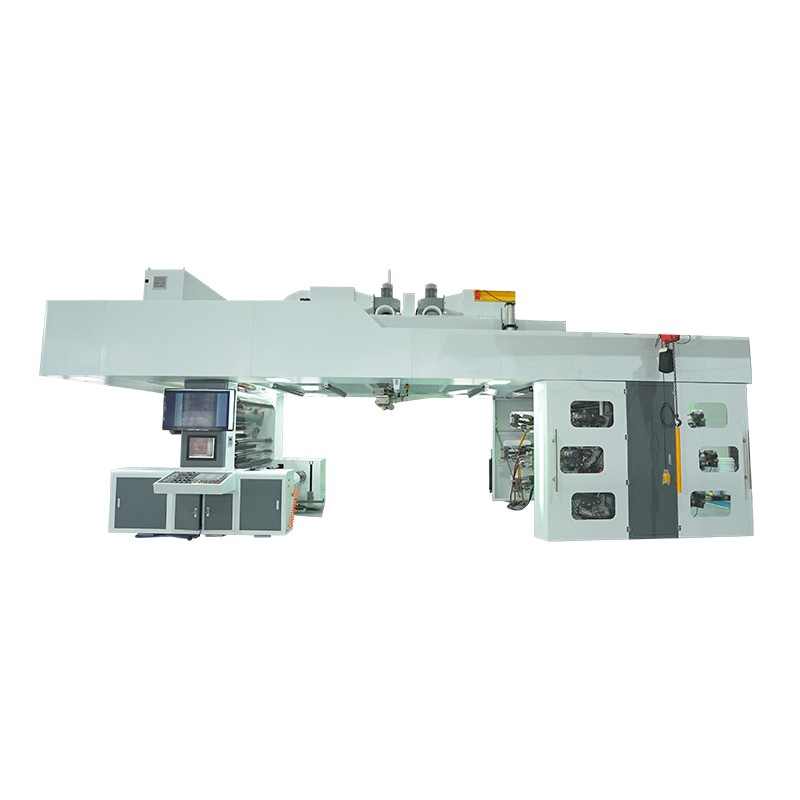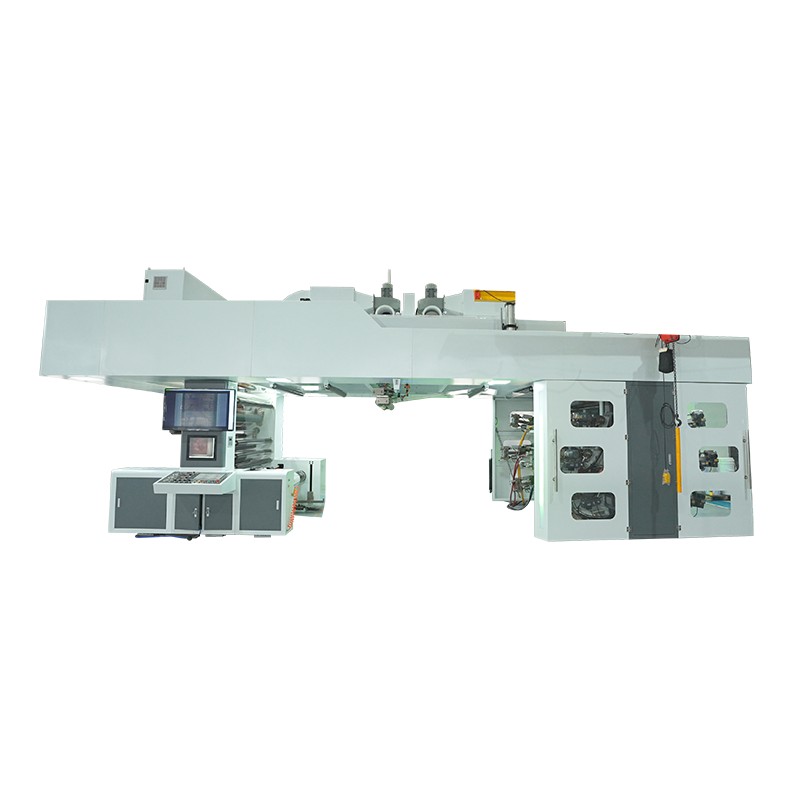

For label and packaging converters seeking an edge in productivity, the high speed gearless flexo press has emerged as the definitive solution. Unlike traditional geared presses, this technology uses individual servo motors on each print station, eliminating gear backlash and enabling faster response during speed ramps and splices. Depending on the application, the press can be configured in several layouts. The Central impression gearless flexo press wraps the web around a single drum, making it the preferred choice for thin films, shrink sleeves, and high-end process printing where dot gain must be controlled within tight tolerances. The Gearless stack flexo press uses a vertical arrangement that saves valuable floor space, provides clear visibility of each deck, and simplifies maintenance on board and paper stock. The Gearless inline flexo press arranges decks in a straight line, allowing easy integration of downstream finishing equipment such as flatbed die cutters, sheeters, or coaters. For fully automated plants, the Fully automatic gearless flexo press adds pre-register cameras, auto impression setting, sleeve storage systems, and recipe-driven job changes to minimize operator intervention. Across all models, the gearless design provides longer sleeve life, quieter operation, and lower total cost of ownership over the life of the press.
The High Speed Gearless Flexo Press is built around a thermally stabilized cast-iron frame and industrial-grade linear guides that maintain geometric accuracy even under prolonged high-speed operation. Each print deck is driven by a dedicated AC servo motor with absolute encoder feedback, eliminating gear wear and allowing the operator to change repeat length simply by swapping lightweight carbon-fiber sleeves. The doctor blade chamber, anilox roll, and impression roller are mounted on a retractable cassette that slides out for rapid cleaning and maintenance. A digital pre-register system uses high-resolution cameras to read printed marks and automatically correct longitudinal, lateral, and diagonal position within the first few meters of waste. Tension control is managed through load cells at the infeed, outfeed, and rewind, with dual dancer options for extensible films. The central HMI stores up to 5,000 job recipes, including ink viscosity settings, dryer temperatures, and register offsets. For food-grade packaging, the press can be configured with stainless steel panels, washdown-ready guarding, and FDA-compliant lubrication. The following list summarizes the machine's core specifications.
| Parameter | Standard 8-Color | High-Speed 10-Color |
|---|---|---|
| Max web width | 1,050 mm | 1,450 mm |
| Mechanical speed | 400 m/min | 450 m/min |
| Min repeat length | 300 mm | 250 mm |
| Max repeat length | 800 mm | 900 mm |
| Registration accuracy | ±0.08 mm | ±0.05 mm |
| Sleeve change time | Under 3 min | Under 1.5 min |
| Job change waste | Less than 15 m | Less than 8 m |
| Dryer airflow | 12,000 m³/h per deck | 15,000 m³/h per deck |
All listed values assume a standard 1,050 mm web width and 300–800 mm repeat range; custom configurations are available to match specific substrate and production requirements. The press also supports optional features such as turn-bar systems for double-sided printing, cold foil and lamination units, and inline slitting. Air consumption is approximately 1.8 m³/min at 6 bar, and the machine is designed to integrate with central ink supply systems. Safety features include light curtains, E-stop circuits, and Category 3 safety PLC.