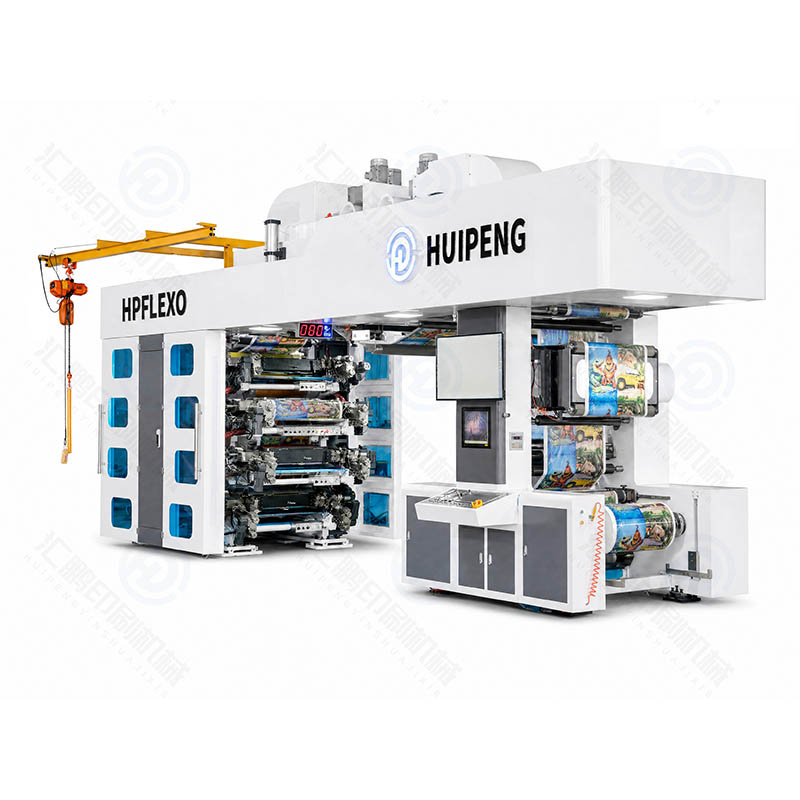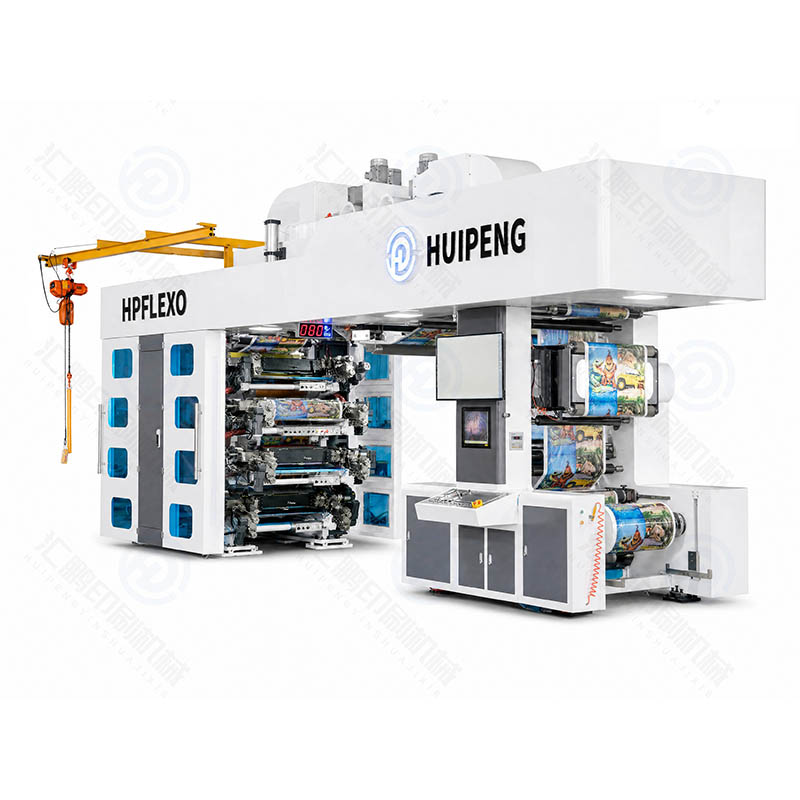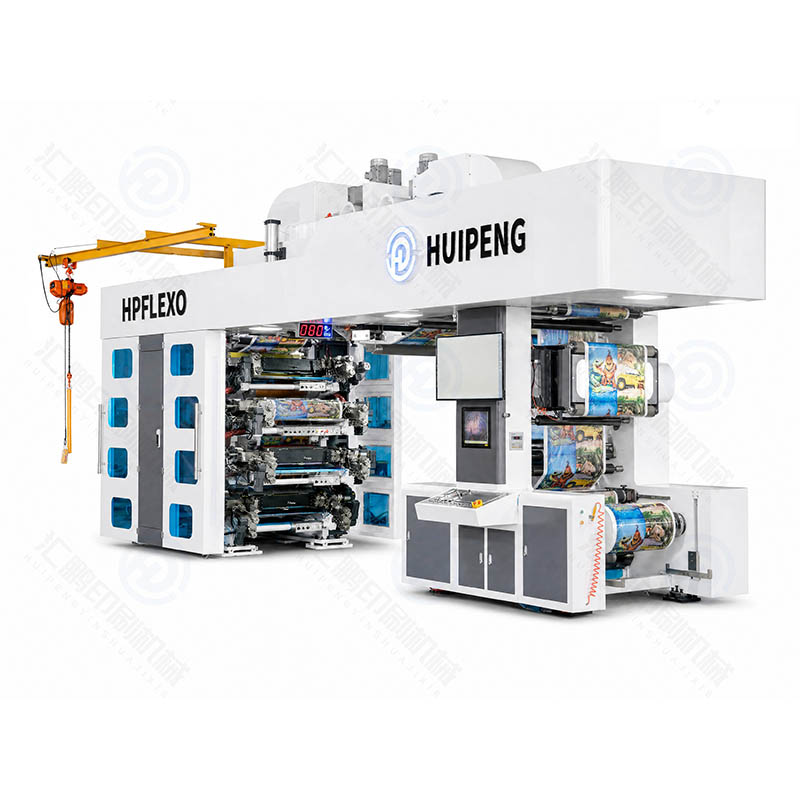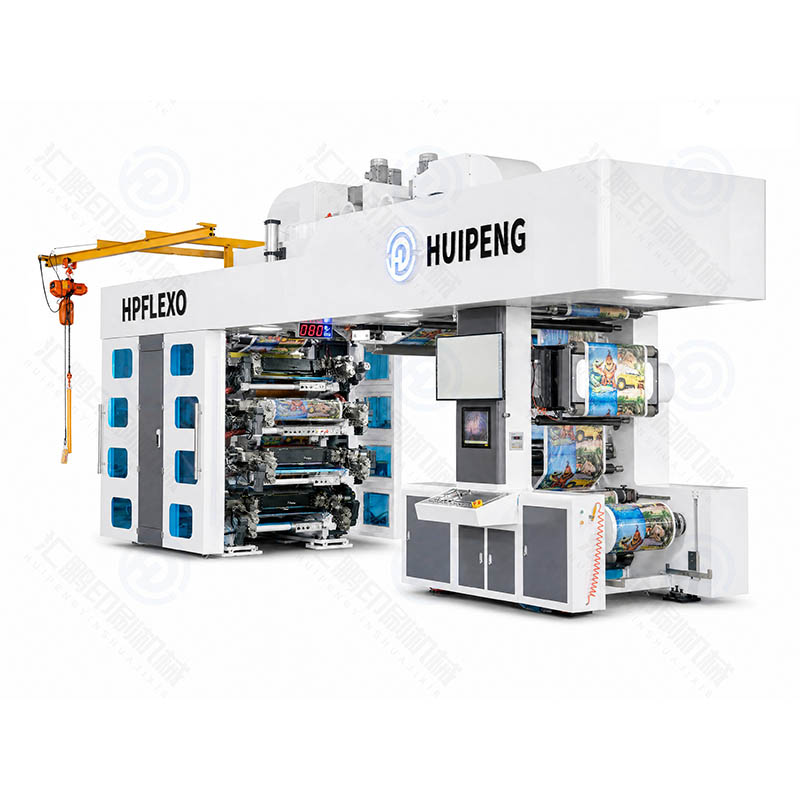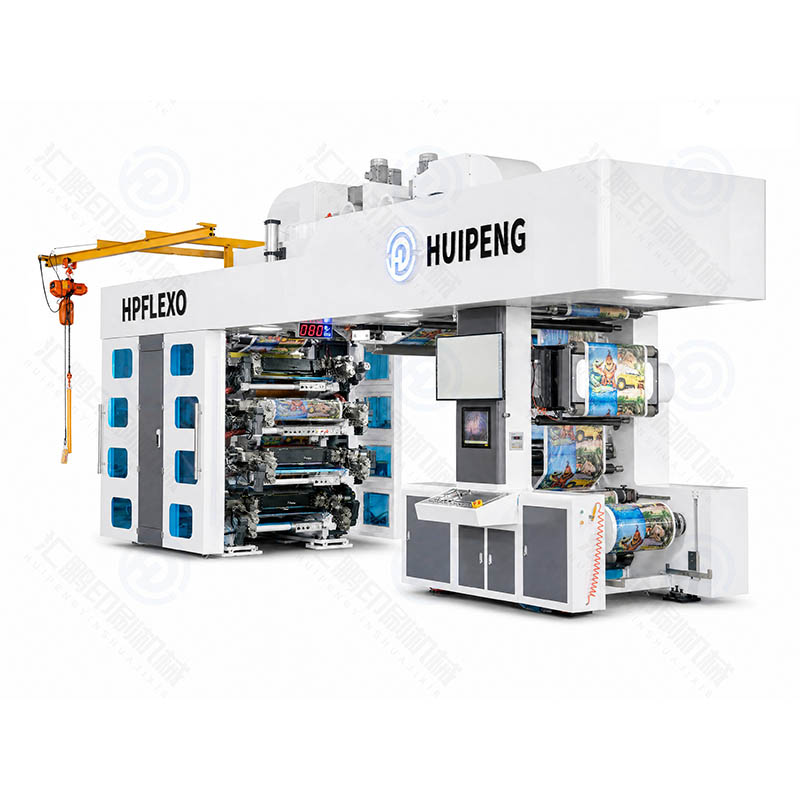

For high-speed flexible packaging and label production, the Stack type flexo printing machine built on servo drive architecture delivers exceptional registration stability, reduced material waste, and fast job changeover. This Stack type flexographic printing machine replaces traditional gear trains with independent AC servo motors on every print station, impression roller, and rewinder, enabling infinite repeat length adjustment without mechanical reconfiguration. The Stack flexo press configuration handles a wide variety of substrates, including BOPP, PET, PE, paper, and aluminum foil, for applications such as shrink sleeves, stand-up pouches, and paper bags. Our Vertical stack flexo press design uses a space-saving upright layout with cantilevered rollers and linear guide rails for easy sleeve changes and minimal downtime. Key specifications and standard configurations are detailed below to support your equipment evaluation.
| Model | Web Width (mm) | Repeat Range (mm) | Max Speed (m/min) | Stations | Drying Power (kW) |
|---|---|---|---|---|---|
| SF-600 | 600 | 300–600 | 250 | 4–6 | 48 |
| SF-900 | 900 | 350–700 | 280 | 4–8 | 72 |
| SF-1200 | 1200 | 400–900 | 300 | 4–8 | 96 |
| SF-1600 | 1600 | 500–900 | 280 | 4–8 | 120 |
The Servo stack flexo printing machine in its current generation is engineered for converters who require short-run agility and long-run consistency. Each print deck features linear rail-mounted slide-out carriages, allowing one operator to exchange anilox rolls and plate sleeves in under five minutes per color without lifting tools. The servo system uses a fiber-optic EtherCAT motion network to synchronize all axes within a 0.1 microsecond timestamp, eliminating color-to-color drift even during rapid acceleration and deceleration. The touchscreen HMI includes recipe storage for up to 200 jobs, automatic print pressure calibration, and real-time registration mark monitoring. The unwind station offers optional automatic splicing with festoon accumulation, while the rewind handles finished rolls up to 1200 mm diameter with taper tension control to prevent telescoping. Drying tunnels are available in hot air, infrared, ultraviolet, or hybrid configurations, with each deck independently controlled for solvent-based, water-based, and UV-curable ink systems. The chambered doctor blade system maintains stable ink density at speeds up to 300 m/min, and the enclosed ink pans reduce VOC emissions and operator exposure. A standard web guide system with ultrasonic edge sensors keeps substrate alignment within ±0.1 mm, while the corona treater option boosts surface energy for film and foil applications. The machine frame is stress-relieved and machined in one setup, providing a vibration-damping foundation that extends bearing life and maintains gearless precision. Optional modules include cold foil stamping, reverse printing, web cleaning, video inspection, and inline slitting or sheeting. The electrical cabinet includes a UPS for safe shutdown, remote access via Ethernet for diagnostics, and energy-recovery braking on all servo axes that feeds power back to the main DC bus, reducing consumption by up to 18% compared to conventional geared machines. Air consumption at 6 bar is approximately 12 liters per cycle, and the machine requires a floor space of 8.5 m length for the SF-900 model with six colors. Installation, training, and on-site support are available for operators and maintenance teams.