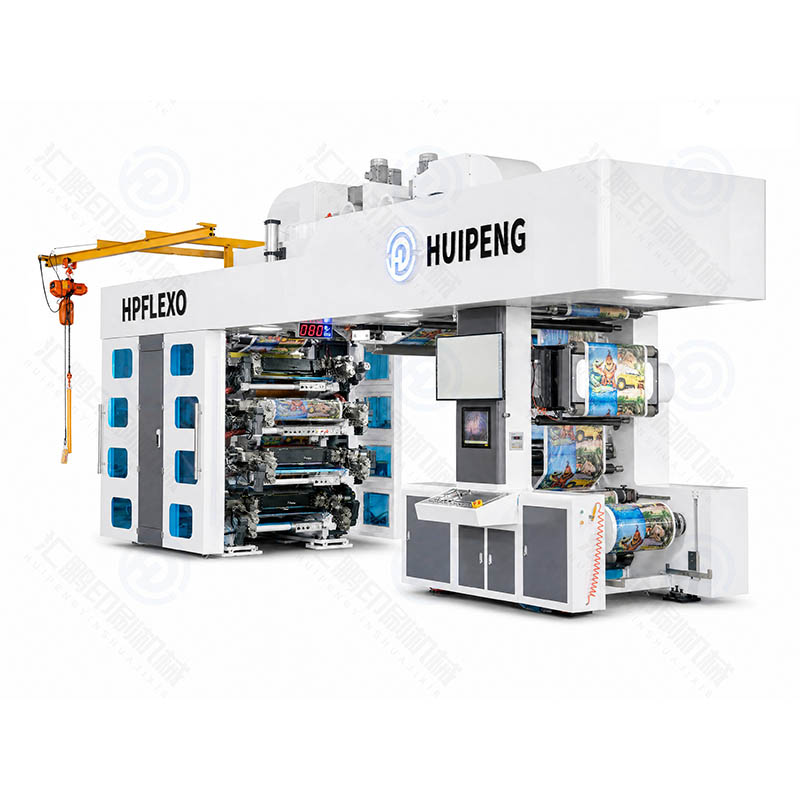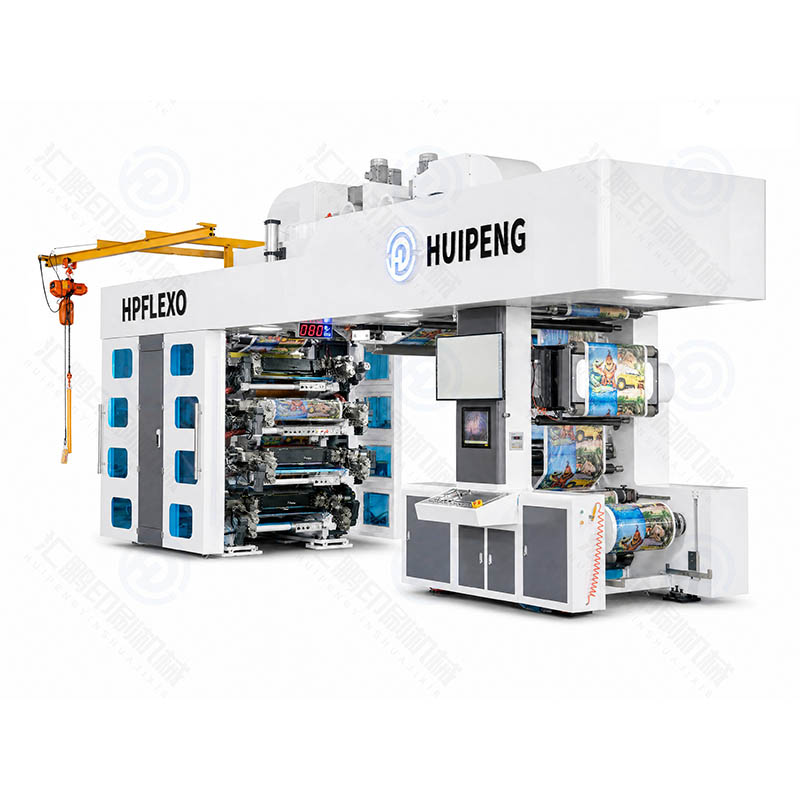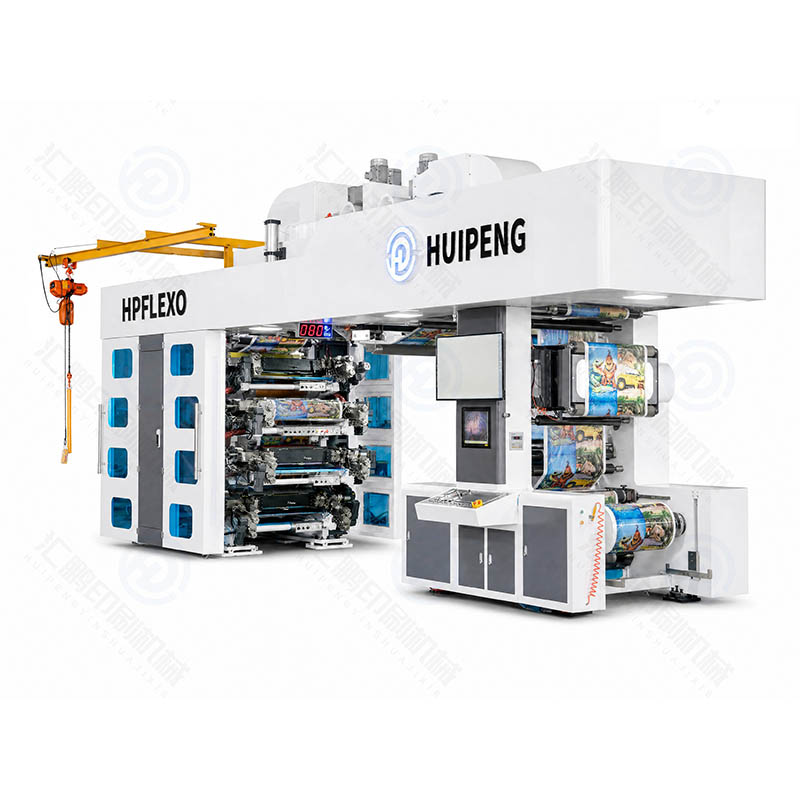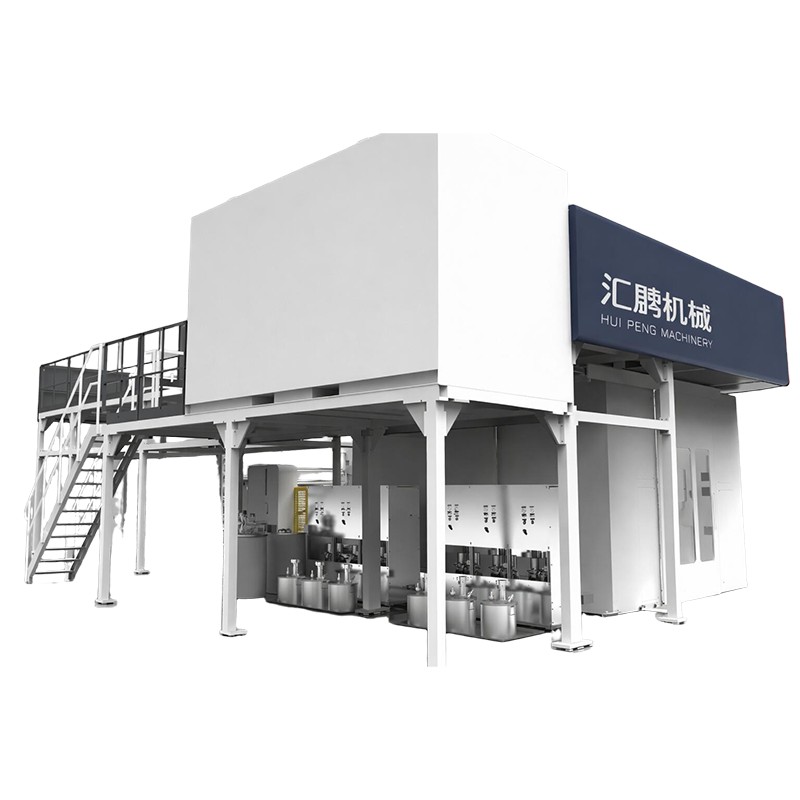

The stack type flexo printing machine is a vertical-station press engineered for mid-web and wide-web converting of paper, film, and flexible packaging. The stacked arrangement places each printing unit above the main web line, which reduces overall machine length and gives operators clear access to color decks. Because the web travels upward through the press, inter-station drying is more effective than on horizontal inline machines, especially when running water-based inks on absorbent paper. For converters that need fast job changeovers, a stack flexo press provides open access to ink trays, anilox rolls, and plate cylinders without removing the web or disturbing tension settings. The same mechanical platform is frequently applied as a stack type paper printing machine for paper sacks, multi-wall bags, wrapping paper, and coated board, while also serving light film and nonwoven applications. A vertical stack flexo press in this range supports both water-based and solvent-based inks, with optional IR or UV curing to handle non-porous films and coated substrates. The standard specification shown below reflects the common production window for flexible packaging and paper converting lines.
| Technical parameter | Standard configuration / range |
|---|---|
| Number of print stations | 2–8 colors, expandable |
| Maximum web width | 600–1600 mm |
| Printing speed | 10–80 m/min, servo controlled |
| Substrate range | 30–300 gsm paper, 20–150 μm film |
| Unwind / rewind diameter | 1000–1200 mm, pneumatic shaft |
| Longitudinal register | ±0.15 mm, closed-loop tension |
| Drying system | Hot air, IR, or UV |
| Drive system | AC servo motors per station |
| Max web tension | 5–50 kg, load-cell feedback |
| Anilox line screen | 200–800 LPI |
The stack type flexographic printing machine is built with a heavy-gauge steel frame and precision-ground side plates to reduce vibration at high line speeds. Each printing deck uses a servo-driven plate cylinder, anilox roll, and chambered doctor blade system for stable ink laydown. Operators can control longitudinal and lateral register from the touchscreen HMI without stopping the press, which helps preserve registration on extensible films and lightweight paper. The tension control system uses load-cell feedback on the unwind, rewind, and outfeed sections, with automatic taper tension as roll diameter changes. This prevents web breaks on thin films and keeps consistent ink transfer on porous paper. The drying system combines high-velocity hot air with optional infrared or ultraviolet curing, allowing the press to run water-based inks at higher speeds without blocking or smearing. For quick job setup, each station accepts anilox rolls from 200 to 800 LPI and chambered doctor blades that slide out on rails for washing and maintenance. The following list highlights key mechanical features of this press:
Additional production parameters are shown below:
| Optional / performance item | Available specification |
|---|---|
| Doctor blade system | Chambered, quick-change |
| Anilox roll type | Ceramic or chrome |
| Registration accuracy | ±0.15 mm |
| Drying temperature | 40–80°C hot air, adjustable |
| Noise level | ≤85 dB(A) |
| Total power | 30–150 kW depending on configuration |
| Max rewind diameter | 1200 mm |