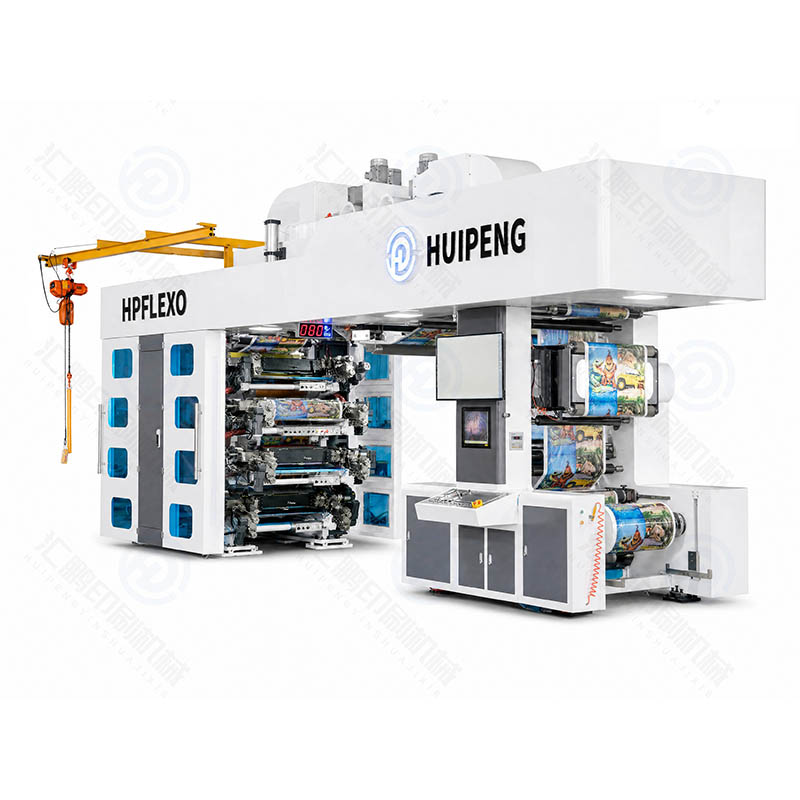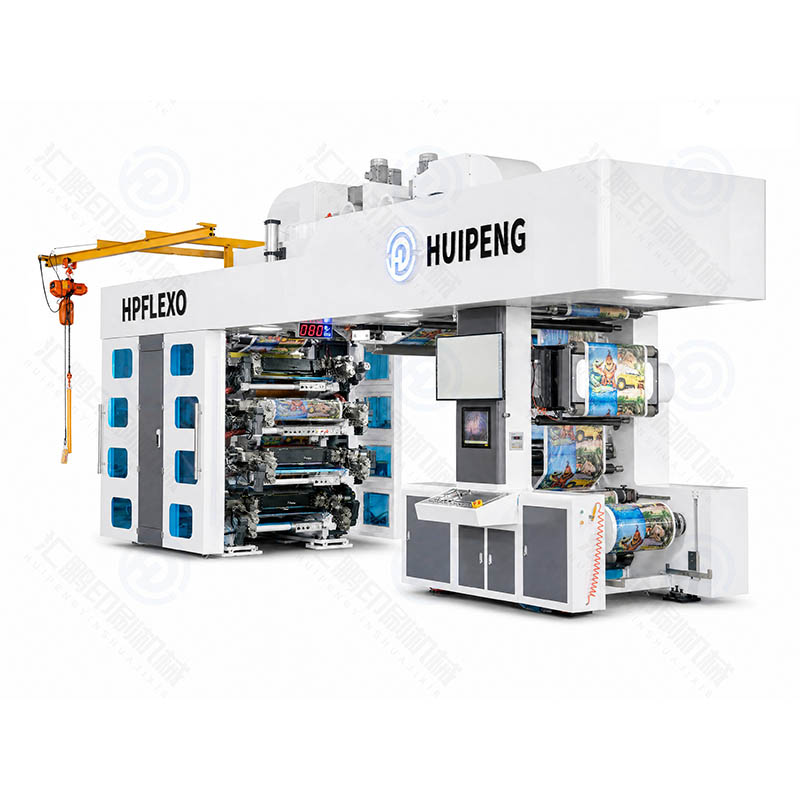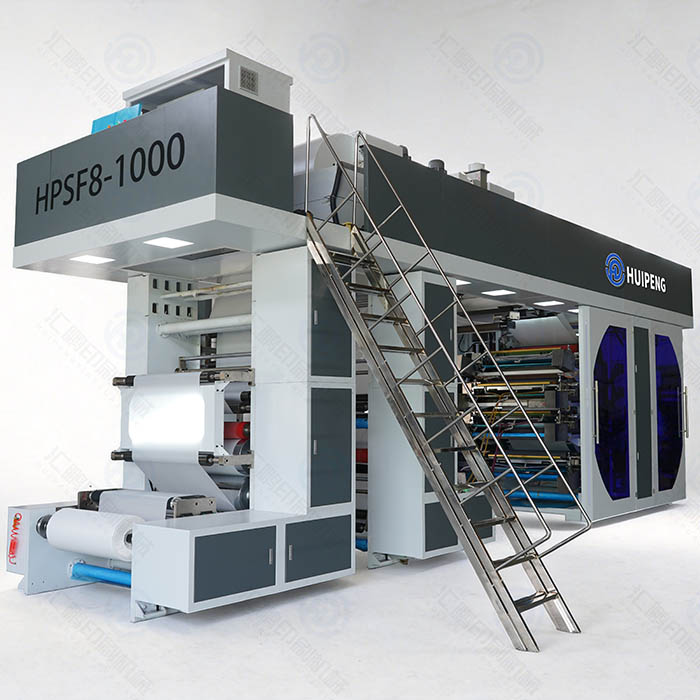

Flexographic printing has entered a new phase where mechanical simplicity and servo precision define production efficiency. Our full servo flexo press is built around that principle. Functionally, it operates as a gearless flexographic press without the traditional gear train connecting print units. Compared with a conventional gearless flexo printing press, this platform uses independent motors on every plate cylinder, anilox roller, and impression roller. The result is a full servo flexographic printing machine that adjusts registration dynamically while the web is moving. In a direct drive flexo press architecture, each deck responds to its own motion controller, eliminating backlash and reducing maintenance intervals. This design is especially valuable for flexible packaging, shrink sleeves, labels, and folding carton applications where repeat length changes are frequent.
By replacing gearboxes and longitudinal shafts with digitally synchronized motors, the press achieves faster ramp-up and stable web tension from zero to maximum speed. Print stations are mounted on linear guides, and the servo feedback loop samples position every 250 microseconds. This closed-loop architecture makes repeat length changes purely electronic, eliminating the need for spare gears. As a result, converters can switch from a 12-inch label repeat to a 24-inch flexible packaging repeat in a single setup step. The machine accepts standard polymer or ceramic anilox sleeves and can run water-based, solvent-based, or UV-curable ink systems. Its modular dryer design provides high-velocity hot air, infrared, or UV curing options depending on the ink chemistry and substrate. For thin films, a chill roller after each print unit stabilizes web temperature and improves color-to-color registration.
The Full servo flexo press is engineered to handle short to medium production runs without sacrificing color density or registration quality. Its cantilevered print decks allow sleeve changes in minutes, while recipe storage can recall job parameters for repeat orders. Tension zones are independently controlled through a closed-loop feedback system, which is critical when running extensible films and thin polyethylene. Web guiding, corona treatment, lamination, and in-line die-cutting units can be added as modular options to match specific converting requirements. The table below lists the standard configurations available for three common widths.
| Model | Printing Width | Max Speed | Color Decks | Repeat Length | Substrate Range |
|---|---|---|---|---|---|
| FS-660 | 660 mm | 250 m/min | 4–8 | 300–600 mm | 12–200 μm film/paper |
| FS-1000 | 1,000 mm | 300 m/min | 6–10 | 350–750 mm | 17–300 μm film/board |
| FS-1300 | 1,300 mm | 280 m/min | 8–12 | 400–850 mm | 20–400 μm board/paper |
The Full servo flexo press accepts standard sleeve sizes and quick-change adapters, reducing makeready to under 20 minutes for a six-color job. Its doctor blade chamber and anilox washing are automated, and the dryer nozzles are positioned for high airflow without ink skinning. Converters can choose water-based, solvent-based, or UV-curable inks depending on the end-use product. Every deck includes motorized print pressure adjustment, allowing operators to fine-tune kiss impression from the main HMI. The press frame is machined from stress-relieved cast iron to maintain geometric stability over years of continuous operation. Air cylinders and servo drives are sized for 24/7 duty cycles in demanding packaging plants.
Converters running label stock, stand-up pouches, and liquid packaging board will find the Full servo flexo press especially productive because the machine maintains consistent impression pressure across the full width. The use of carbon fiber sleeves reduces rotating mass, which allows faster acceleration and deceleration during splice cycles. An automatic wash-up system cleans anilox rollers and doctor blade chambers in less than eight minutes per deck. The press can be equipped with a downstream inspection system that checks print quality at line speed and rejects defective sections without stopping production. For facilities with limited floor space, the cantilever design reduces overall machine length and simplifies sleeve handling. Quick-change trolleys for anilox and plate sleeves keep operator intervention to a minimum. The main HMI stores up to 1,000 recipes and provides trend data for production monitoring. Remote access via Ethernet allows technical support teams to diagnose faults and update motion profiles without an on-site visit. The press integrates with corona treaters, web cleaners, and lamination units through a common control protocol. Energy recovery from the dryer exhaust can be added to reduce operating costs in high-volume plants. This modular approach allows converters to configure the machine for current needs and scale up as production demands grow.