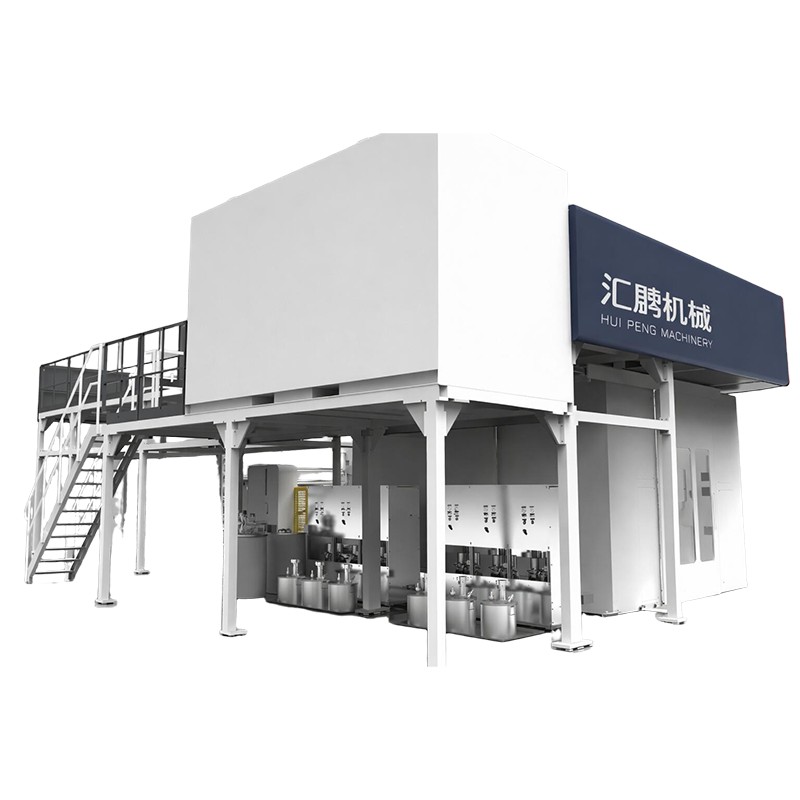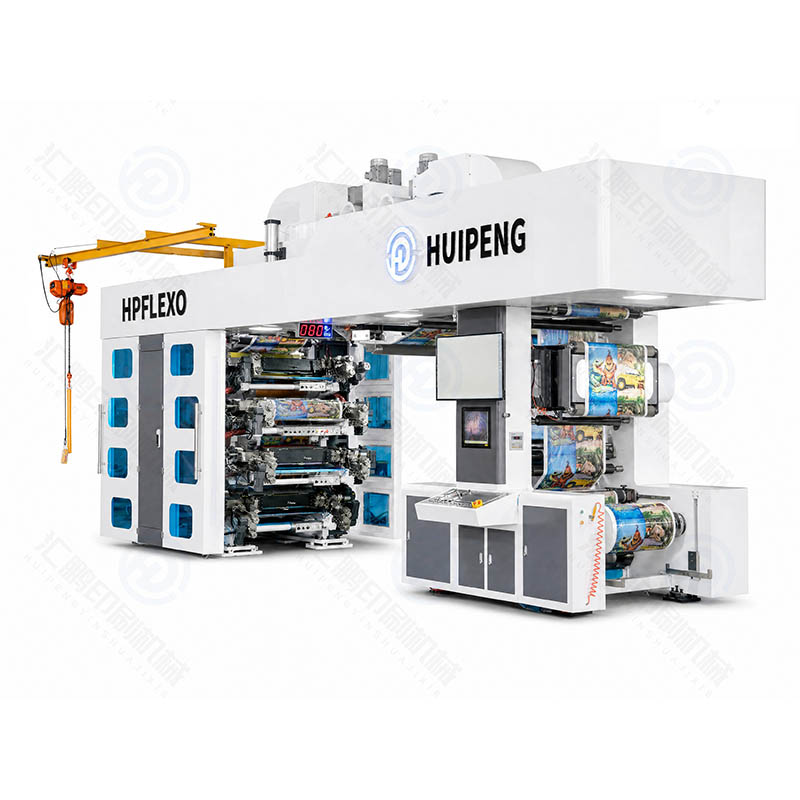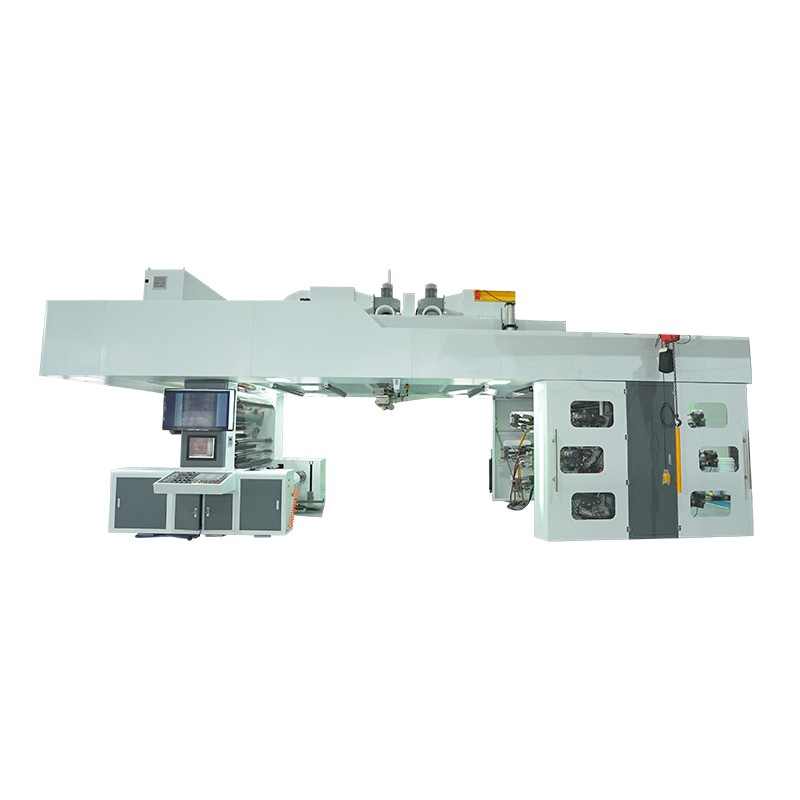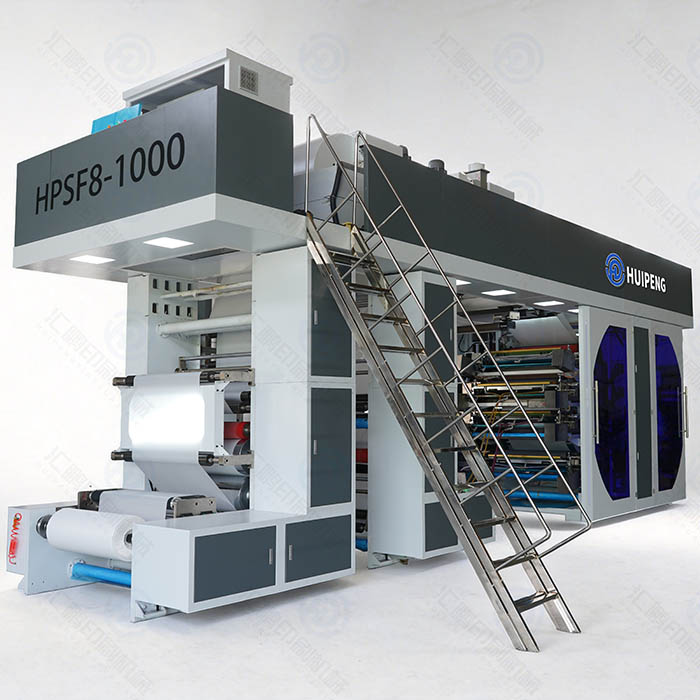

The gearless stack flexo printer has become the preferred choice for flexible packaging converters requiring high-speed changeovers and consistent color-to-color registration. Built on the proven layout of a Stack type flexo printer, this press replaces mechanical gear trains with independent servo motors on each print deck. The result is a noticeable improvement in print quality and repeatability compared to a conventional Stack flexographic printer. Operators upgrading from a standard Stack type flexographic printing machine will immediately see reduced setup time, because repeat length is adjusted digitally rather than through gear changes. When evaluated against an older Stack flexo press, the servo-driven architecture also minimizes dot gain, extends plate life, and supports faster job changeovers. The independent drive control, combined with a cantilevered drum and sleeve system, allows one operator to complete a full sleeve change in under ten minutes. This machine is well suited for film, paper, and aluminum foil applications at widths up to 1600 mm and speeds up to 250 m/min. After switching to a gearless servo system, converters typically report a 40% reduction in make-ready waste and a 30% increase in press uptime. The ability to store repeat jobs in memory and recall them automatically is particularly valuable for short-run orders. The press also supports reverse printing and seamless integration with inline die-cutting, sheeting, or slitting units. The gearless architecture significantly reduces mechanical wear points, leading to lower maintenance costs over the life of the press. With independent servo drives, kiss impression can be set digitally on each deck, protecting both plate and substrate.
The gearless stack flexo printer features a solid cast iron side frame and a thermally stabilized structure to maintain geometry under high-speed operation. Each print station is driven by a dedicated servo motor with absolute encoders, eliminating cumulative pitch error. The web path is vertical, with hot-air or infrared dryers positioned between color decks for effective solvent or water-based ink drying. The chambered doctor blade system maintains stable ink density, while the ceramic anilox rollers can be quickly exchanged to match different screen rulings. A touchscreen HMI stores job recipes, preset registration parameters, and impression settings for repeat orders. The main technical specifications are listed below.
The following table summarizes the standard machine specifications for quick reference.
| Parameter | Standard Range |
|---|---|
| Max mechanical speed | 250 m/min |
| Max printing speed | 200 m/min (solvent-based), 180 m/min (water-based) |
| Printing width | 600–1600 mm |
| Repeat length | 300–800 mm |
| Substrate thickness | 12–200 µm (film), 30–200 gsm (paper) |
| Registration accuracy | ±0.1 mm |
| Anilox roller diameter | Ø100–Ø200 mm |
| Drying temperature | 60–120°C |
| Air pressure requirement | 0.6–0.8 MPa |
| Installed power | 35–75 kW depending on station count |
| Machine dimensions (L×W×H) | Customized to web width and station count |
The vertical stack configuration saves floor space compared to inline or central impression presses, and the open access between stations simplifies cleaning and maintenance. The gearless design also allows reverse printing and variable repeat without sleeve diameter changes, making the gearless stack flexo printer a versatile asset for short-run and long-run flexible packaging production. Standard safety features include light curtains, emergency stops at each station, and a CE-compliant electrical cabinet. Remote diagnostics capability allows service technicians to monitor press performance and adjust parameters online, reducing downtime for troubleshooting. The press can be configured with automatic viscosity control, web cleaning, and corona treatment for difficult films.