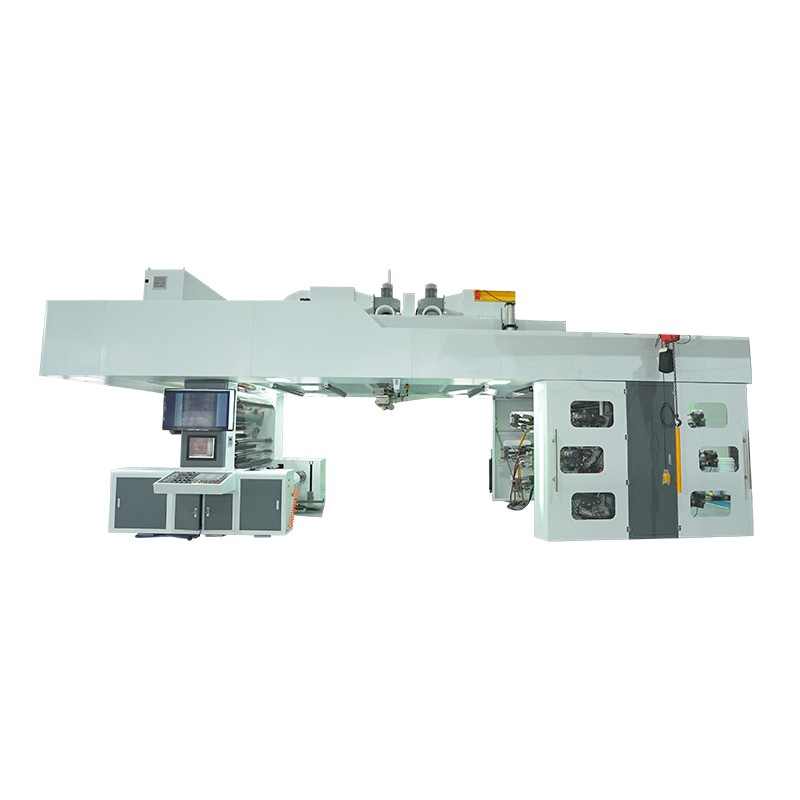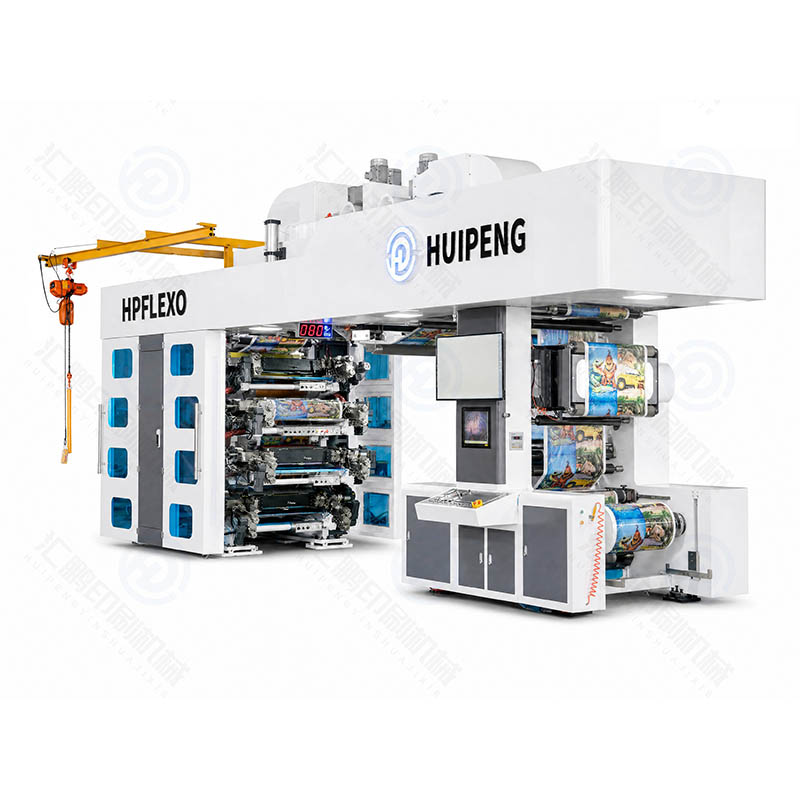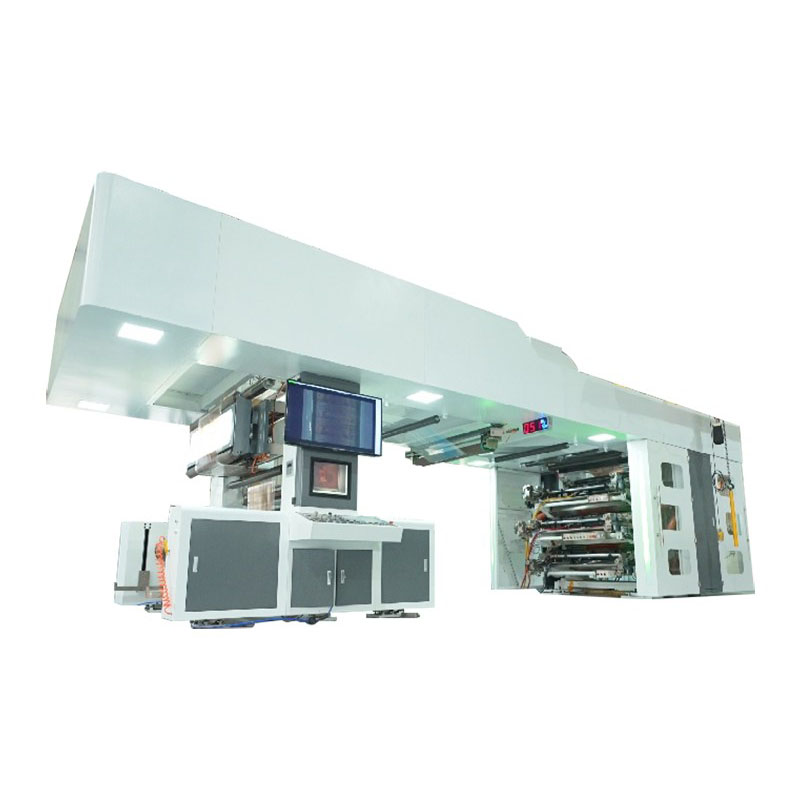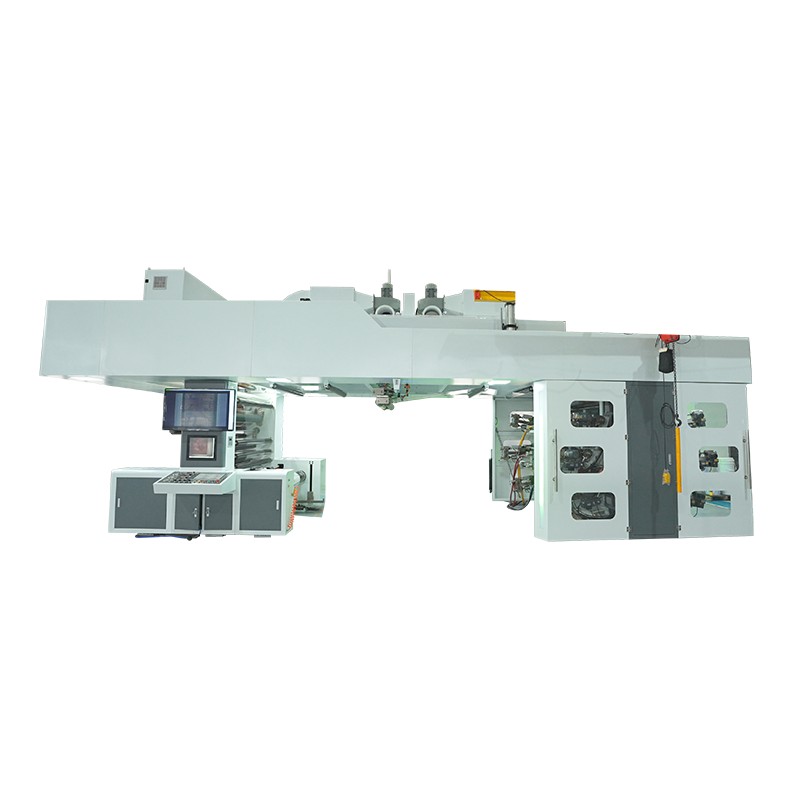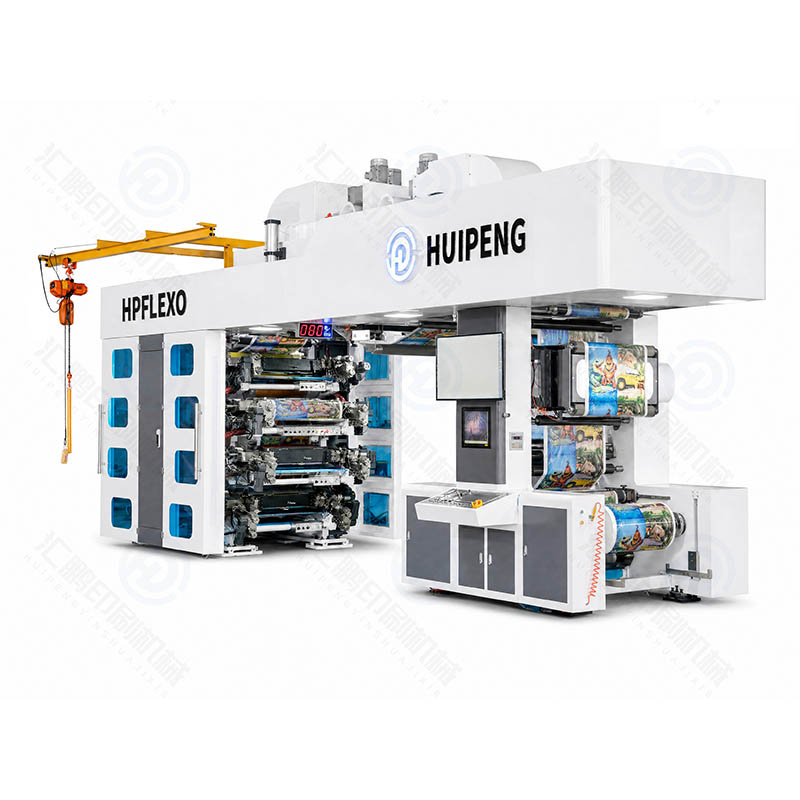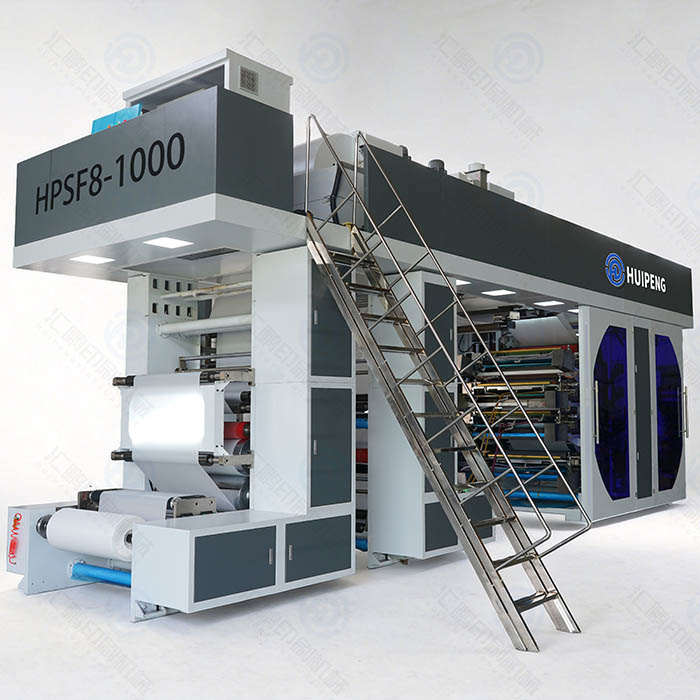

Engineered for flexible packaging, label, and paperboard converting, the servo-driven CI flexographic press delivers the same mechanical advantages as a Gearless CI flexo press: no main gear train, low vibration, and quiet operation at high speed. Built around a fixed central impression drum, it shares the structural stability of a Gearless central impression flexo press, which keeps substrate stretch low and registration steady across long runs. Converters looking for easier installation and lower maintenance will recognize the familiar layout of a Shaftless CI flexo press—no mechanical line shaft, reduced alignment work, and faster commissioning. At the core, the machine functions as a Full servo CI flexo press, with each plate cylinder, anilox roll, doctor blade chamber, and impression actuator driven by a dedicated servo motor. That eliminates gear backlash, supports infinite repeat length adjustment through sleeve changes, and provides repeatable dot placement at up to 400 m/min. The result is a platform that reduces setup waste, improves color-to-color registration, and adapts quickly to short-run orders without sacrificing production speed. The servo control system also enables automatic pre-register and closed-loop tension control, which are critical for thin extensible films and high-quality process printing. Typical applications include flexible packaging, shrink sleeves, labels, and paperboard cartons where color density and dot gain must remain stable across rolls.
The Servo-driven CI flexographic press is configured for thin films, shrink sleeves, labels, paper, and multi-layer laminates. The cantilever sleeve design and air-mandrel locking system allow offline sleeve preparation, reducing downtime and protecting print quality. A ceramic-coated central impression drum with digital temperature control, a multi-zone hot-air drying tunnel, and a closed-loop web tension system are included in the standard build. The closed-loop web tension system maintains consistent substrate tension from unwind to rewind, preventing wrinkles and misregister during acceleration and deceleration. The machine is available in 8, 10, or 12 color stations, and every station accepts tool-less anilox and sleeve changes.
Key technical parameters:
Configuration options:
| Parameter | Standard | Optional / Upgrade |
|---|---|---|
| Print width | 1050 mm | 1250 mm / 1450 mm / 1600 mm |
| Color stations | 8 | 10 / 12 |
| Maximum speed | 400 m/min | 500 m/min |
| Repeat length | 320–800 mm | 250–900 mm |
| Longitudinal register | ±0.05 mm | ±0.03 mm with auto-register camera |
| Substrate thickness | 19–150 μm | 12–200 μm for barrier films and foil |
| Anilox LPI | 200–1000 | 1200 for high-definition flexo |
| Sleeve type | Carbon fiber | Composite lightweight |
| Drying | Hot air, water-based/solvent | UV / LED / EB |
| Tension control | Closed-loop servo tension | Multi-zone load-cell with automatic taper |
The Servo-driven CI flexographic press also features a servo-driven doctor blade chamber system, automatic impression setting with motorized actuators, and a recipe management HMI that stores job parameters for repeat orders. The central drum is surface-hardened and water-cooled, maintaining thermal stability across long runs. An automatic wash-up cycle and pre-register function further reduce material waste. Each print station is controlled independently, so operators can adjust registration on the fly, and the integrated camera system can correct longitudinal and lateral misalignment without stopping the press. Operators can save complete job recipes, including impression pressure, drying temperature, and register settings, and recall them for repeat orders in seconds.
Additional machine features:
This level of automation makes the Servo-driven CI flexographic press suitable for short-run job shops that need fast changeover as well as high-volume converters running 24/7. The servo architecture also lowers energy consumption compared with gear-driven systems, because motors run only when needed and stops are smoother, reducing wear on mechanical components. For flexible packaging applications that demand high-resolution process printing, the optional 1200 LPI anilox rolls and auto-register camera deliver dot stability well above conventional CI flexo standards. An optional auto-register camera measures printed marks and sends correction signals to the servo drives in real time, keeping color-to-color deviation within ±0.03 mm at maximum speed.