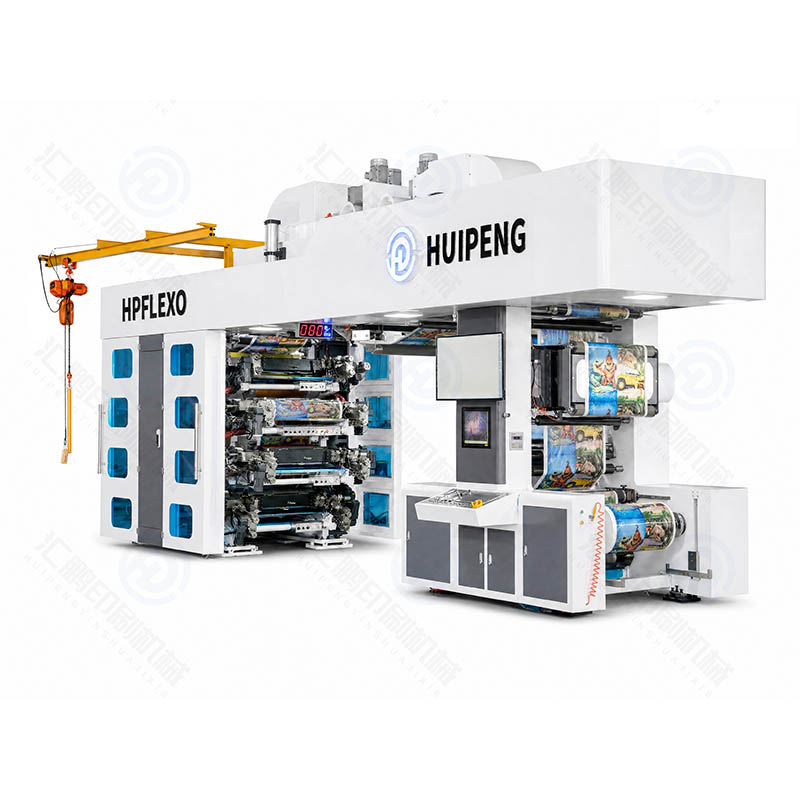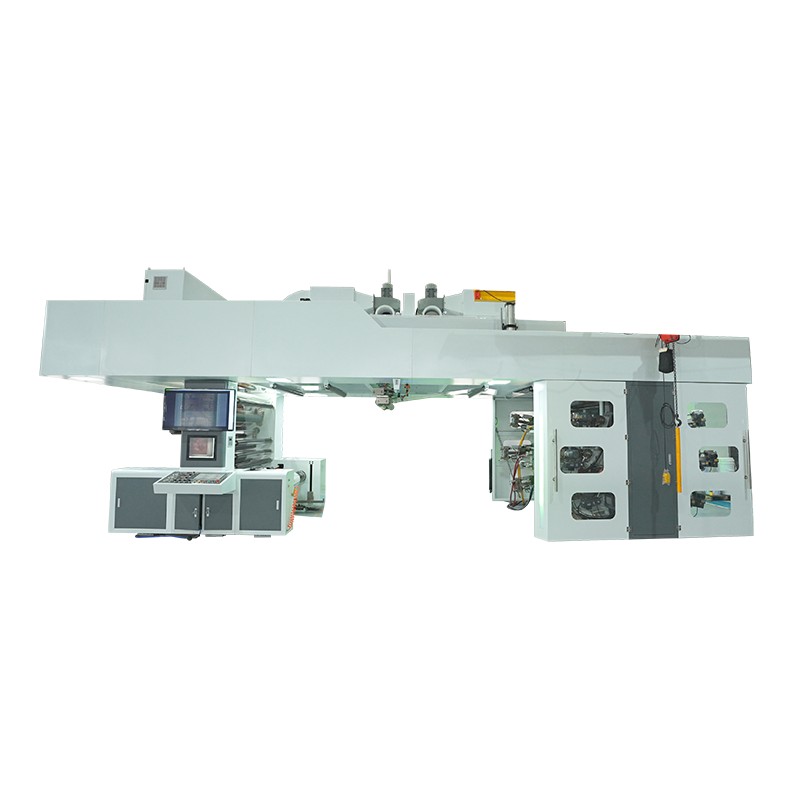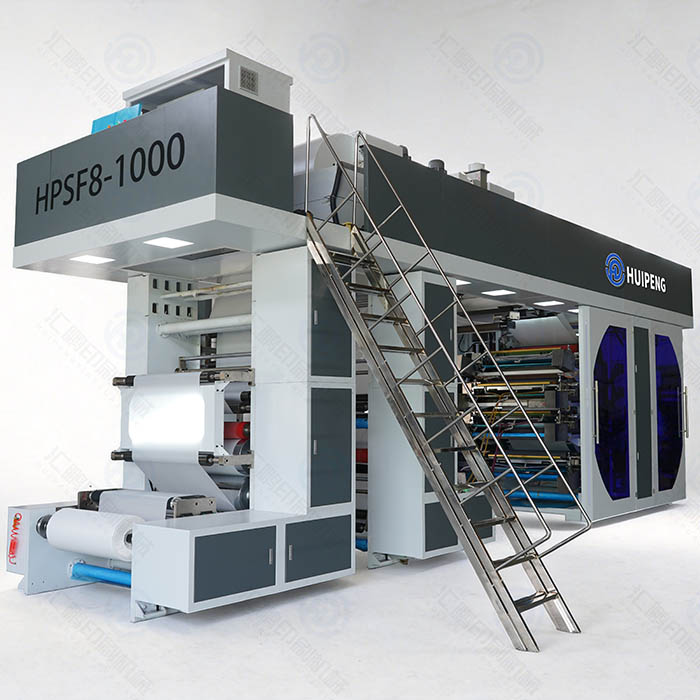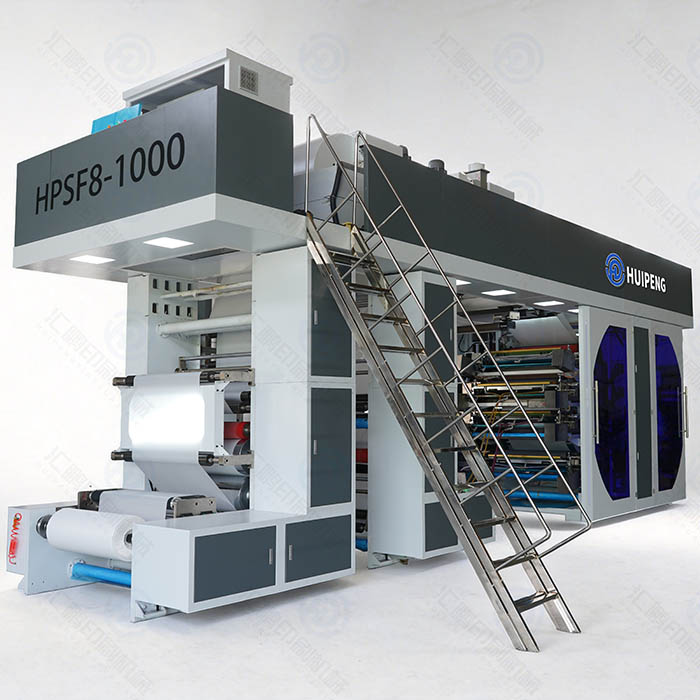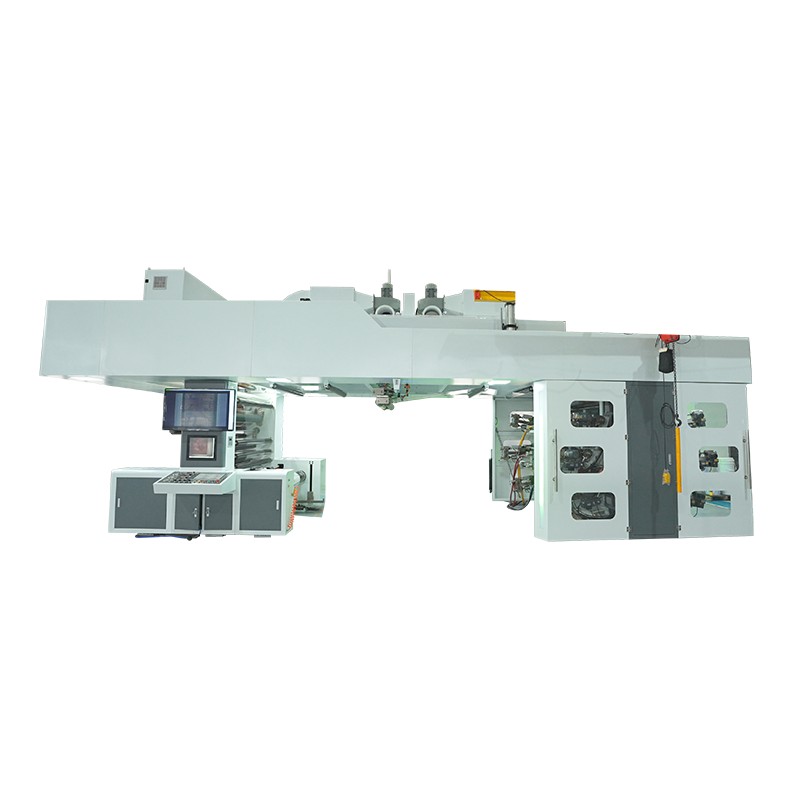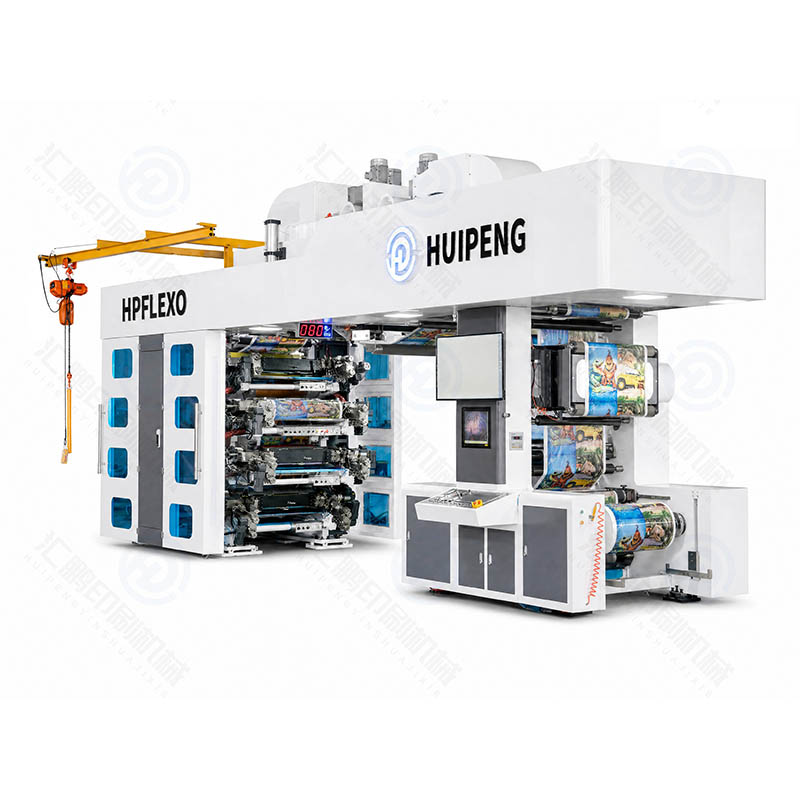

For converters aiming to raise throughput without sacrificing print quality, CI flexographic printing machinery offers an efficient path to high-definition output on flexible substrates. The central impression flexo printing machine architecture mounts all color decks around a single precision-ground drum, which stabilizes the web and prevents register drift during acceleration. As a modern CI flexo press, it handles extensible films, shrink sleeves, and lightweight paper with minimal distortion. The central drum flexo printing machine configuration also reduces vibration transfer between stations, enabling tight tolerances on long repeat jobs and faster changeovers.
The CI flexographic printing machine is engineered around a rigid central impression drum that keeps the substrate in a fixed position while all color decks apply ink in sequence. This design significantly reduces web flutter and eliminates the need for multiple tension zones between print stations. Operators benefit from faster job setup, fewer registration adjustments, and consistent repeatability on demanding materials such as BOPP, PET, PE, CPP, paper, aluminum foil, and laminated structures.
Standard configuration and capabilities:
Key machine parameters across three popular configurations:
| Parameter | Model 850 | Model 1050 | Model 1250 |
|---|---|---|---|
| Max web width | 850 mm | 1050 mm | 1250 mm |
| Print width | 820 mm | 1020 mm | 1220 mm |
| Color stations | 4–8 | 4–10 | 4–10 |
| Repeat length | 300–700 mm | 350–800 mm | 400–1000 mm |
| Max speed | 250 m/min | 300 m/min | 300 m/min |
| Central drum diameter | 1200 mm | 1200 mm | 1500 mm |
| Drying options | Electric / gas | Electric / gas / UV | Electric / gas / UV LED |
| Substrate thickness | 20–100 μm | 20–120 μm | 20–120 μm |
| Unwind / rewind diameter | 800 mm | 800 mm / 1000 mm | 1000 mm |
Precision subsystems include:
Drying and temperature control:
The drying system can be configured with electric hot air, gas burners, or UV LED arrays. Each color station includes independent temperature control and digital airflow adjustment. The central drum is equipped with a water circulation channel to maintain surface temperature within ±1°C, which is critical for high-speed printing on heat-sensitive films. After the final color station, a chill roller stabilizes the ink film before rewinding.
Substrate and application range:
Typical applications include flexible packaging, shrink sleeve labels, wraparound labels, paper cups, and folding cartons. The machine handles substrate thickness from 20 μm to 120 μm and repeat lengths from 300 mm to 1200 mm depending on drum size and gear pitch. It supports solvent-based, water-based, and UV-curable inks with viscosity control from 12 to 45 seconds depending on the ink system.
Automation and control:
The control system uses a PLC with a 15-inch touchscreen HMI, Ethernet/IP connectivity, and optional remote access for diagnostics. Job settings can be stored and recalled for repeat orders, reducing setup time. Automatic viscosity control maintains ink density, while a video monitoring system displays each print station on a central monitor. Tension zones are automatically calibrated for different substrates, and the register control system compensates for thermal expansion during long runs.
Safety and maintenance:
Guarded walkways, emergency stop stations, and interlocked doors protect operators during high-speed operation. The quick-change sleeve system reduces manual lifting, and the automatic wash-up function minimizes solvent exposure. Central lubrication points and modular component layouts allow routine maintenance without removing the web path.