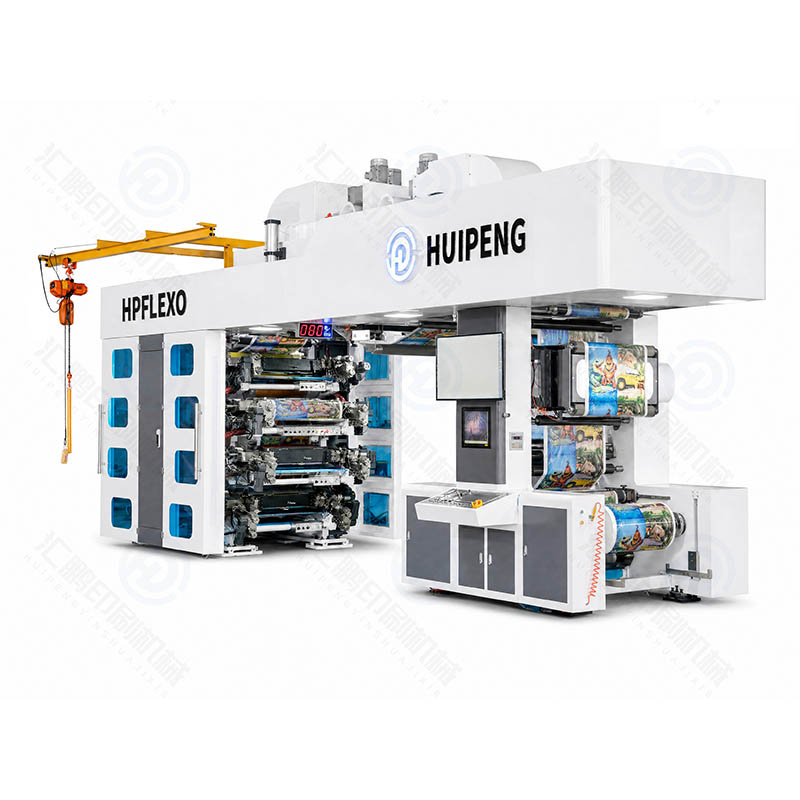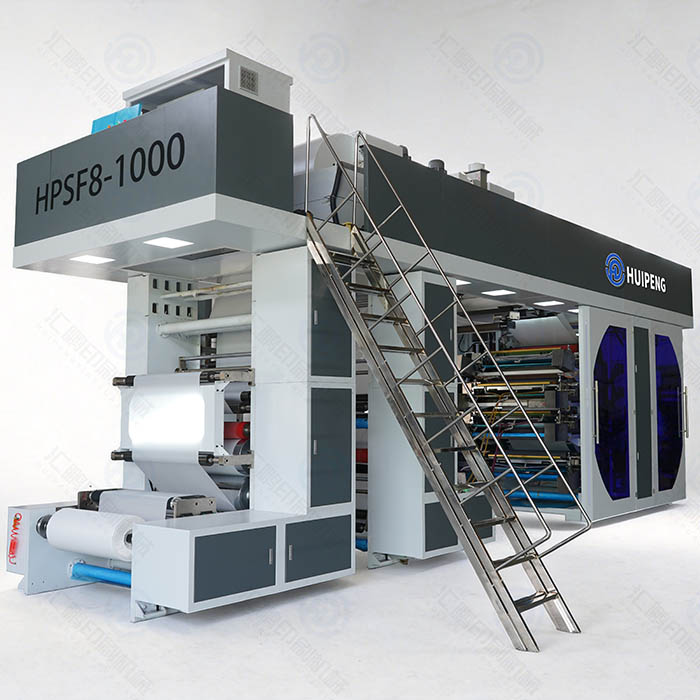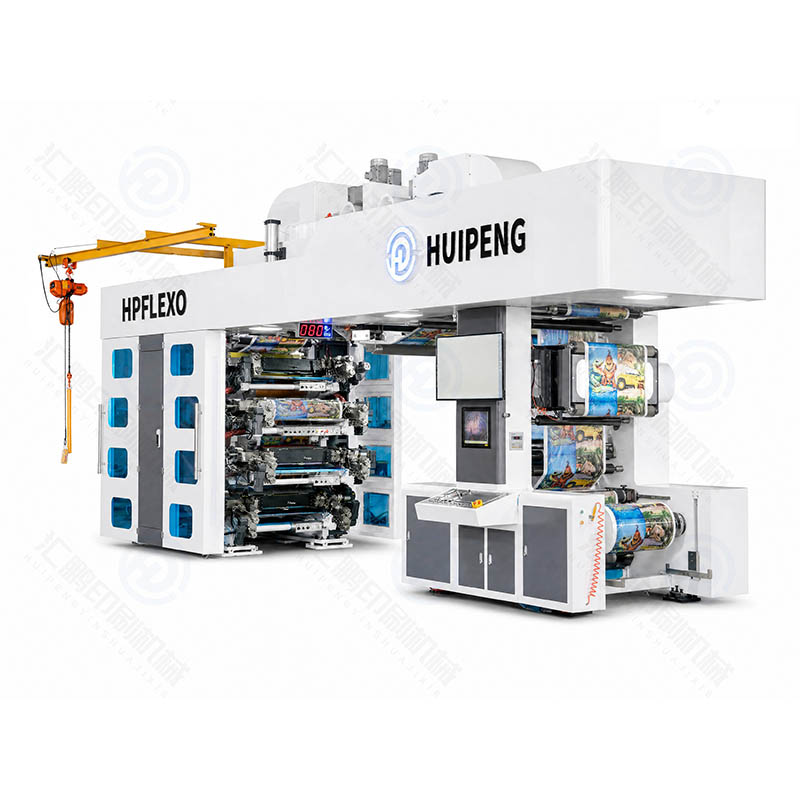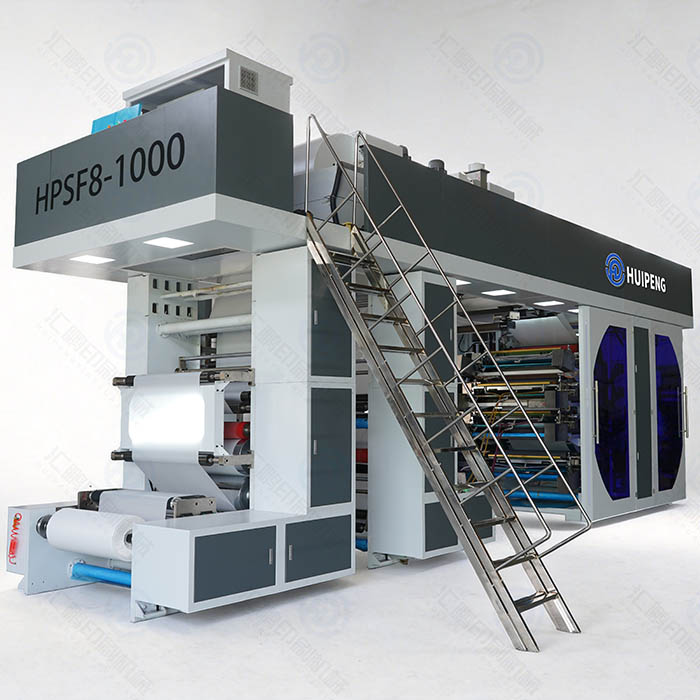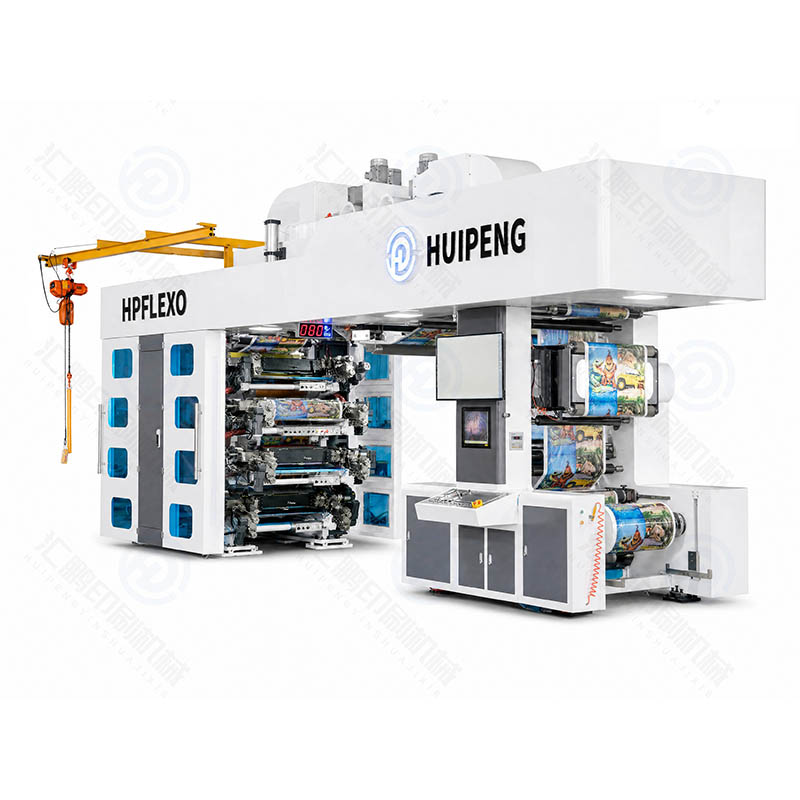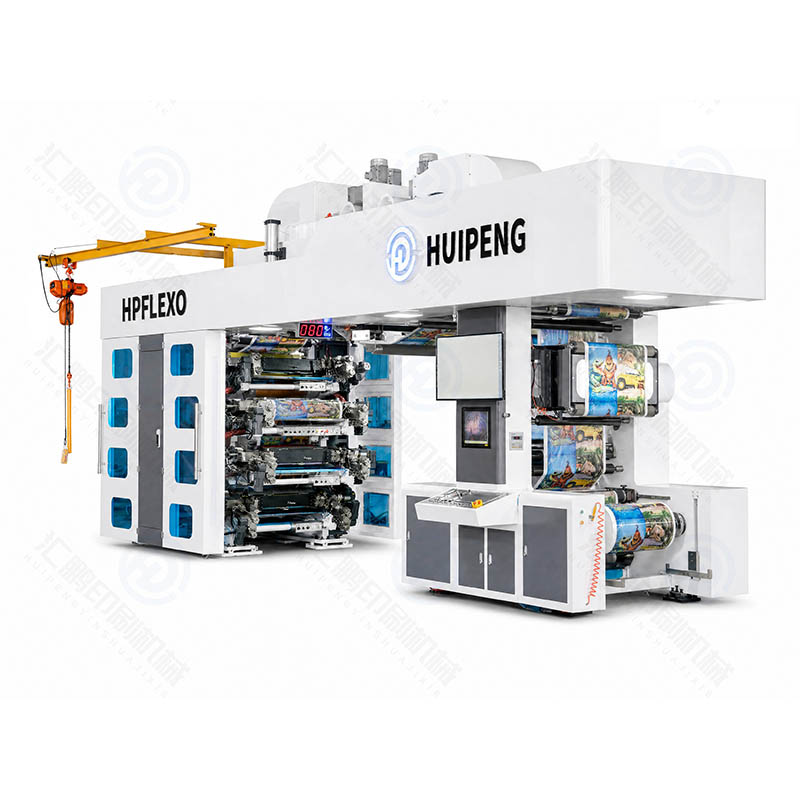

When evaluating CI flexo printing machinery, a full servo central impression flexo printing machine offers the highest level of automation for flexible packaging converters. This type of CI flexographic printing machine replaces traditional mechanical gear trains with independent servo motors on every print station, central drum, and web path. As a result, the CI flexo press achieves faster make-ready, lower waste, and tighter color-to-color registration. The full servo architecture also enables precise tension zones, reduces gear marking, and supports repeat lengths beyond the limits of fixed gear pitch. This platform is widely used for flexible packaging, shrink sleeves, and wrap-around labels, particularly in short-run jobs that demand quick changeover and repeatable print quality.
| Parameter | Specification |
|---|---|
| Print width | 850 / 1050 / 1250 / 1450 mm |
| Color decks | 8 or 10 (custom configurations available) |
| Max mechanical speed | 300 m/min |
| Print repeat length | 300–800 mm |
| Registration accuracy | ±0.05 mm at full speed |
| Substrate range | 12–150 μm film, 30–80 gsm paper, aluminum foil |
| Unwind/rewind diameter | 600 / 800 / 1000 mm |
| Tension control | Fully automatic, servo-driven closed loop |
| Drying temperature | Up to 120°C (hot air), adjustable per deck |
| Doctor chamber | Enclosed, carbon fiber with pneumatic loading |
The Full servo CI flexo printing machine is built around a rigid cast iron frame and a large central impression drum that supports high-speed printing without vibration. Each print deck is cantilever-mounted, which allows an operator to change sleeves or anilox rolls from one side without removing the entire station. The automatic register system uses high-resolution cameras to detect micro marks and adjusts each servo motor in real time, keeping color-to-color tolerance within ±0.05 mm even during acceleration and deceleration. Closed-loop tension control across the unwind, infeed, outfeed, and rewind sections protects thin extensible films from stretching or bagging. The drying system can be configured with hot air, gas burners, or UV LED lamps depending on the ink and coating chemistry, and each unit has an independent temperature curve for water-based or solvent-based inks. For converters handling flexible packaging, shrink sleeves, and labels, this configuration reduces setup scrap by up to 40% compared with conventional gear-driven presses. The main console centralizes job memory, viscosity control, web cleaning, and defect detection, so one operator can manage the entire production run. The open software platform also supports integration with ERP and color management systems, which streamlines production planning and traceability. All main components are accessible from the operator side, which reduces planned maintenance time. The machine can be optionally equipped with lamination, varnishing, or die cutting modules at the delivery end, making it a complete converting line rather than a standalone printer.