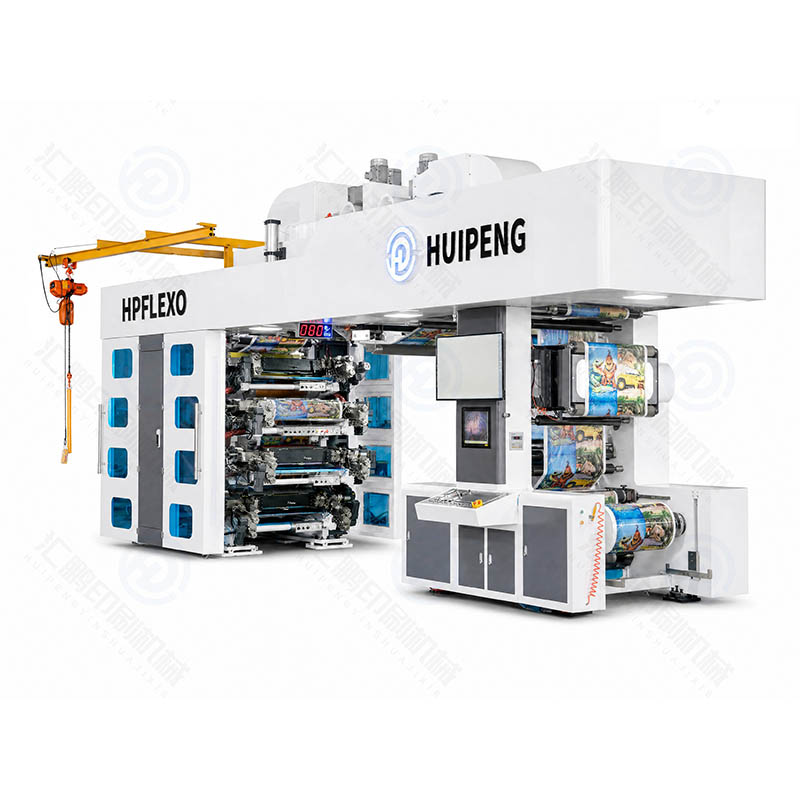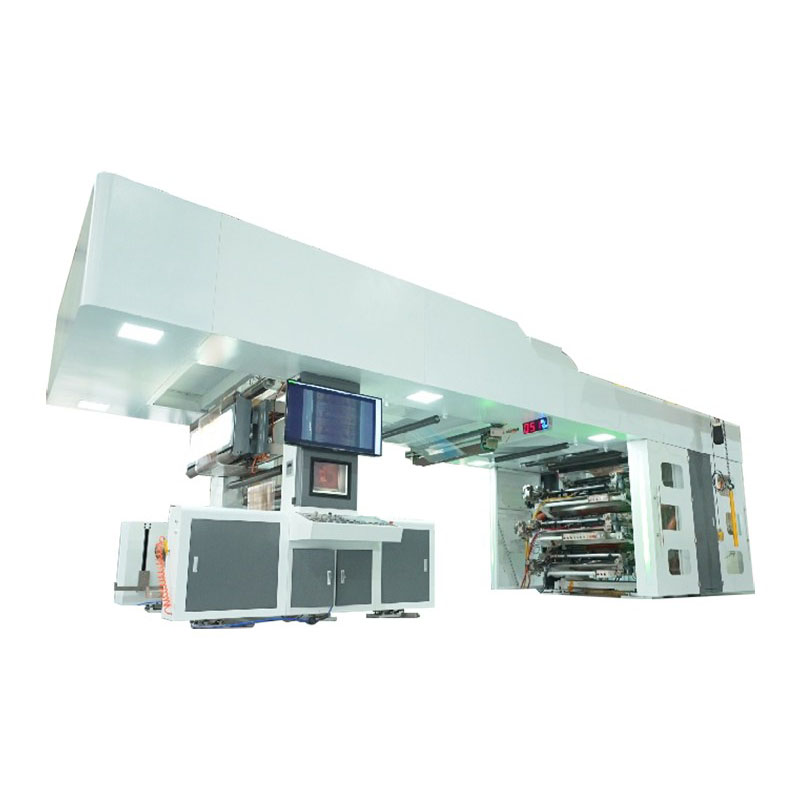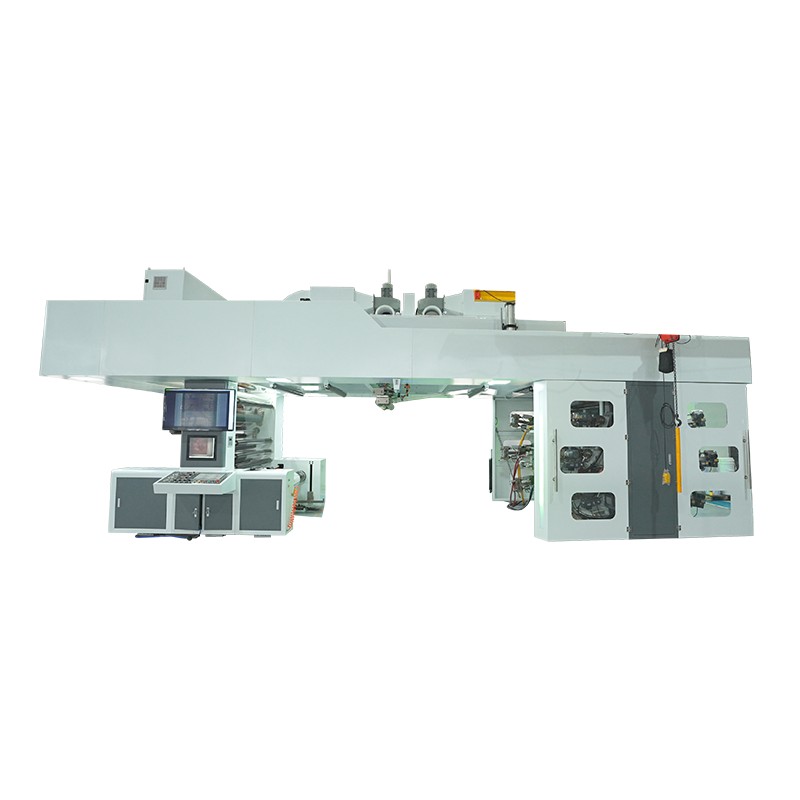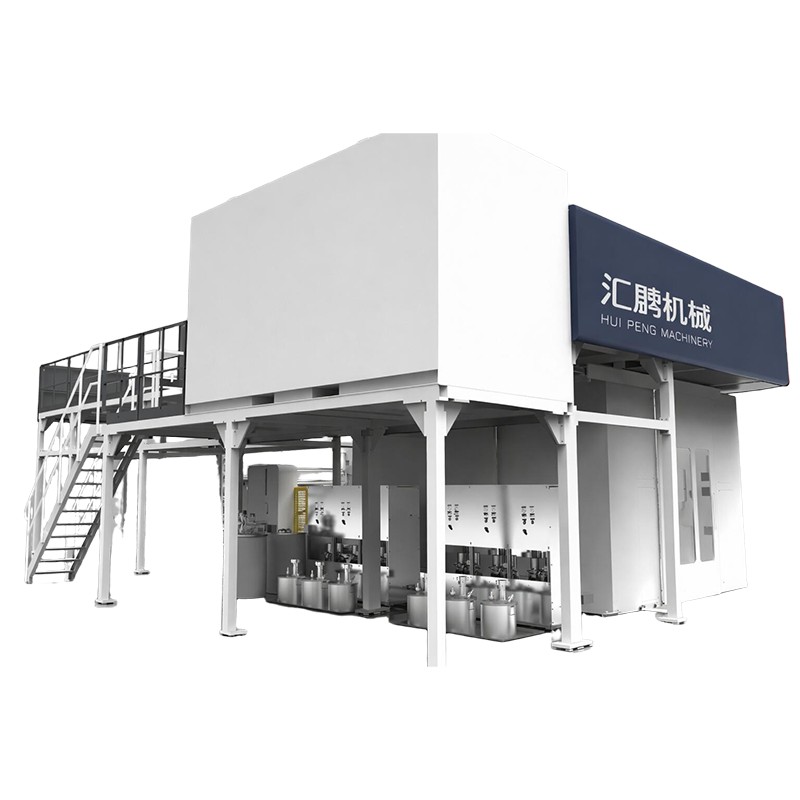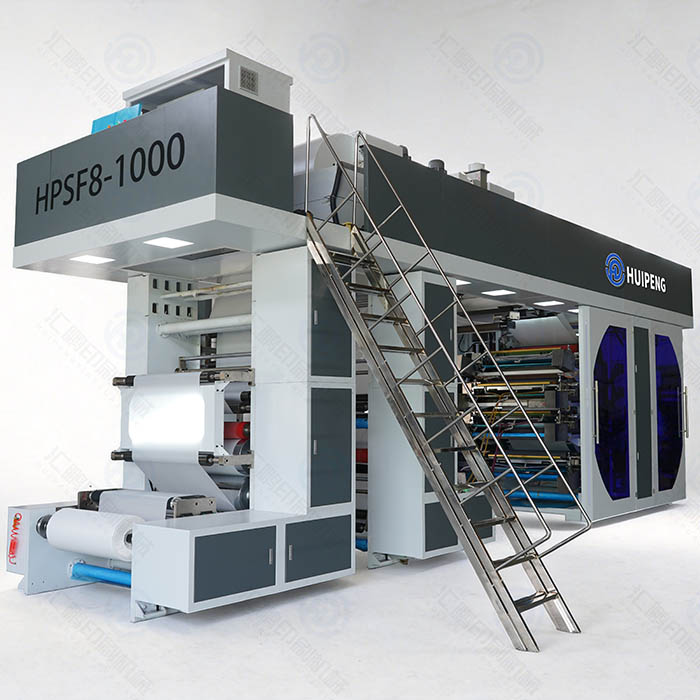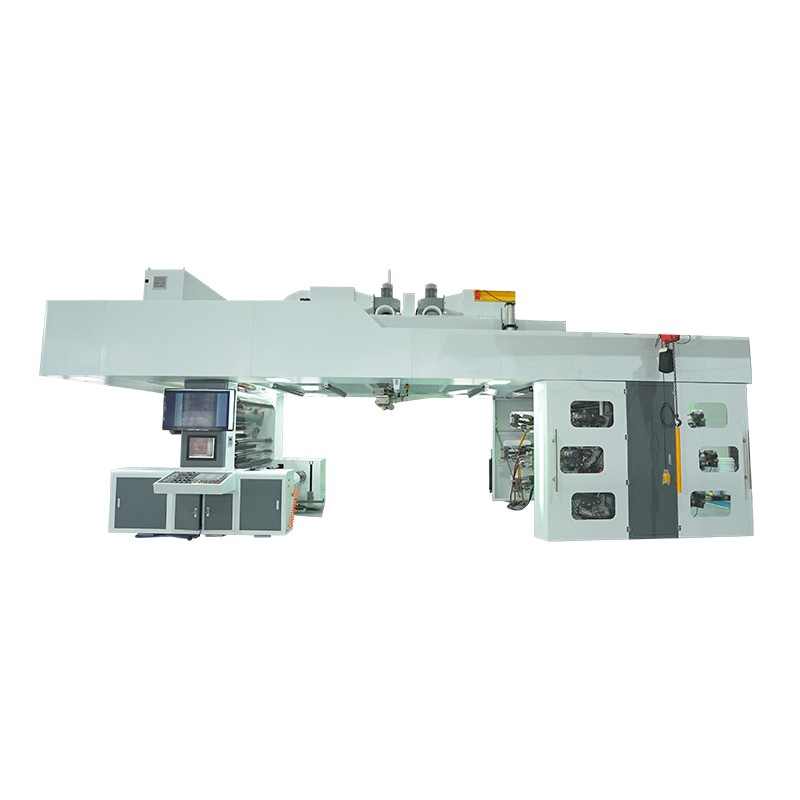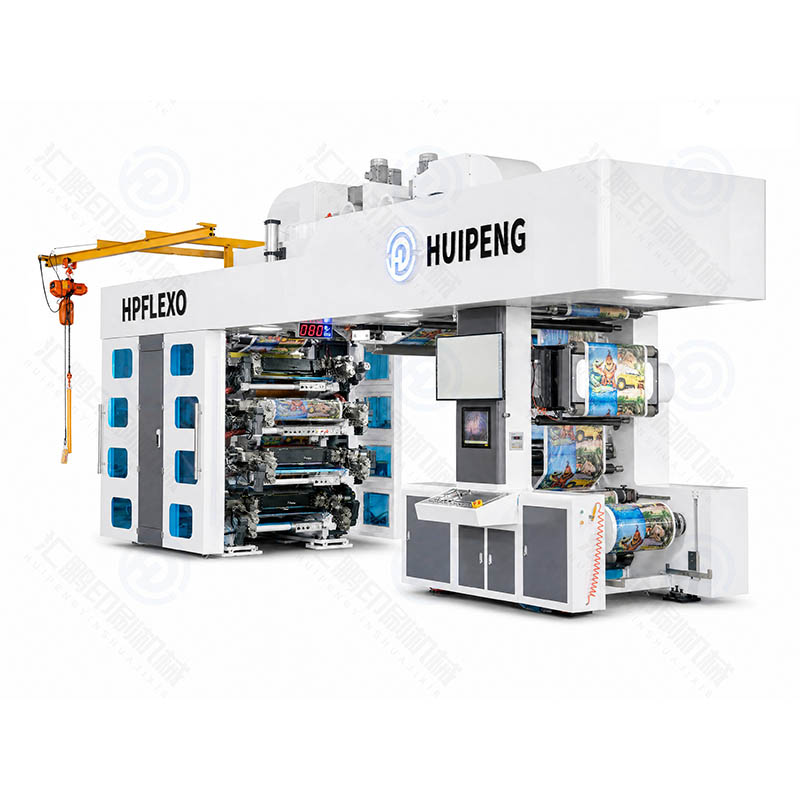

Modern flexible packaging lines must balance throughput, register accuracy, and waste reduction. The move to servo-driven platforms within CI flexo printing machinery has become a practical requirement for converters running shrink sleeves, pouches, wraparound labels, and liquid cartons. Our servo-driven press retains the rigid central drum architecture of a proven Central impression flexo printing machine, but every plate cylinder and anilox roll is driven independently by AC servo motors. This removes gear backlash and allows infinite repeat length adjustment within the sleeve range. Compared with a typical CI flexographic printing machine, the servo design delivers faster job setup, lower mechanical maintenance, and much tighter color-to-color registration at full production speed. Operators can store recipes for repeat jobs and recall them from the touchscreen, reducing changeover time from over an hour to under 15 minutes. For packaging converters that need short-run profitability and consistent quality, the system operates as a high-production CI flexo press with repeatable results on LDPE, BOPP, PET, paper, and foil. The standard configuration includes automatic web guiding, pre-register capability, and integrated dryer management to keep the process stable from splice to splice.
The Servo-driven CI flexo press achieves a mechanical speed of 300 m/min and maintains full register up to 250 m/min. The central impression drum is thermally stabilized and supported by wide-base bearings to reduce deflection under load, while each servo deck uses direct-drive motors with 4,000-line encoders for real-time position correction. The press handles substrates from 12 to 150 microns with closed-loop tension control on every zone, so light films do not stretch and heavy laminates stay flat. The sleeve-based print and anilox system allows offline preparation; operators can load sleeves with pneumatic locking and automatic position memory, then recall all settings from the HMI. The drying system uses high-velocity hot air with variable recirculation and optional UV or LED curing, which extends the substrate range to shrink films and synthetic materials. The doctor blade chamber is retractable and pneumatically clamped, making wash-up faster and safer. In addition, the integrated controls monitor viscosity, pH, and temperature for water-based inks, while solvent-based inks benefit from optional fume extraction and monitoring. Below are the standard configuration parameters for quick reference.
| Parameter | Specification |
|---|---|
| Number of colors | 4, 6, 8, or 10 (servo driven decks) |
| Printing width | 800 mm / 1000 mm / 1200 mm / 1400 mm |
| Repeat length range | 300–800 mm (gearless sleeve, 1 mm pitch) |
| Maximum mechanical speed | 300 m/min |
| Full-register printing speed | 250 m/min |
| Longitudinal register accuracy | ±0.05 mm |
| Lateral register accuracy | ±0.05 mm |
| Substrate thickness | 12–150 micron |
| Substrate types | LDPE, BOPP, PET, CPP, paper, aluminum foil |
| Unwind / rewind diameter | 600 mm / 800 mm / 1000 mm (pneumatic shaft or shaftless) |
| Drying system | High-velocity hot air, variable recirculation, optional UV/LED |
| Tension control accuracy | ±1 N per zone, closed-loop load cell |
| Anilox roll line screen | 200–1200 LPI depending on application |
| Doctor blade system | Chambered, retractable, pneumatic clamping |
| Sleeve changeover time | Under 15 minutes for 8-color set |
| Power supply | 3-phase, 380–440 V, 50/60 Hz |